GET TO THE ELEPHANTS ALREADY

THAILAND ELEPHANTS WEEK ONE, PART THREE
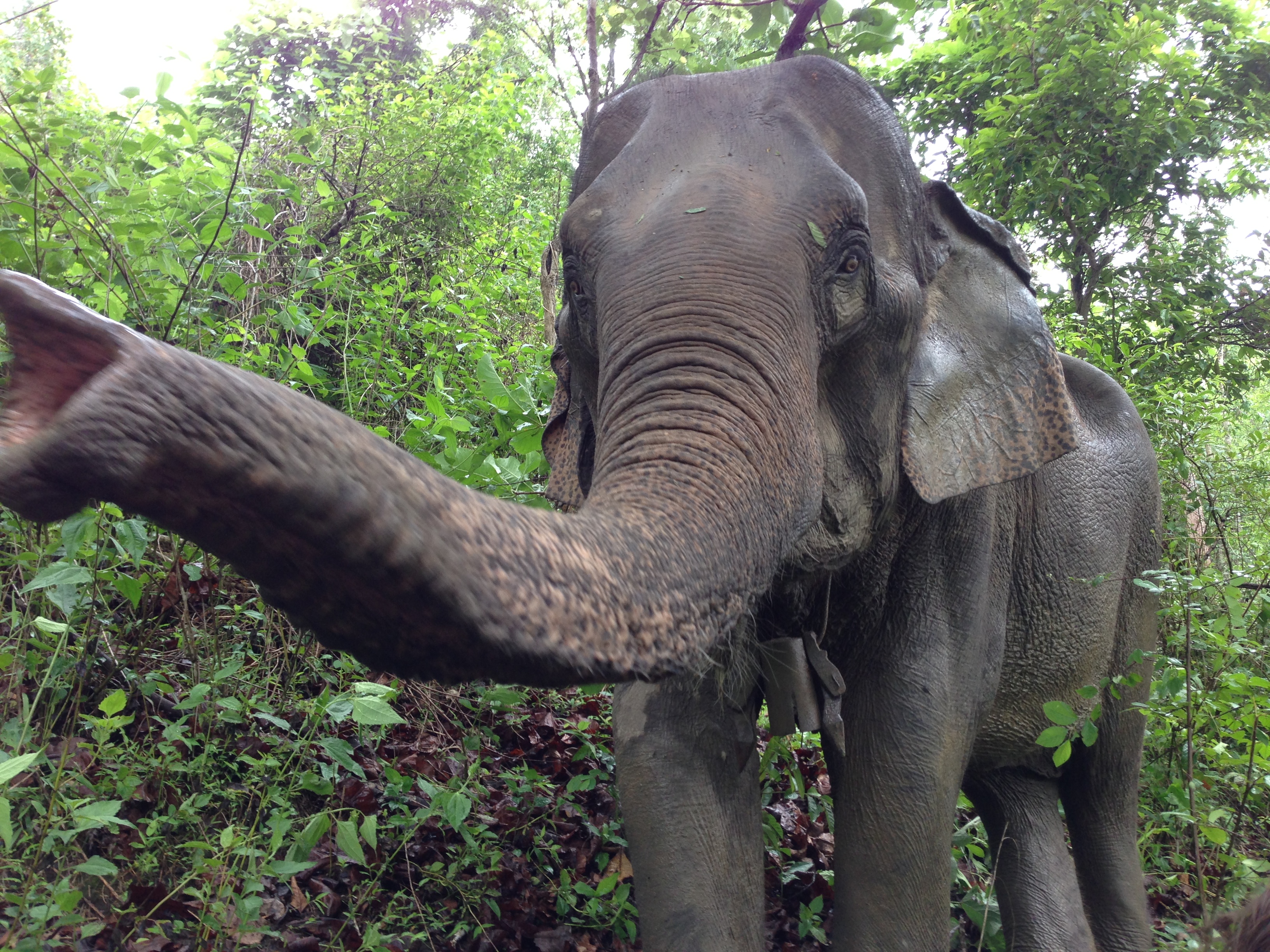
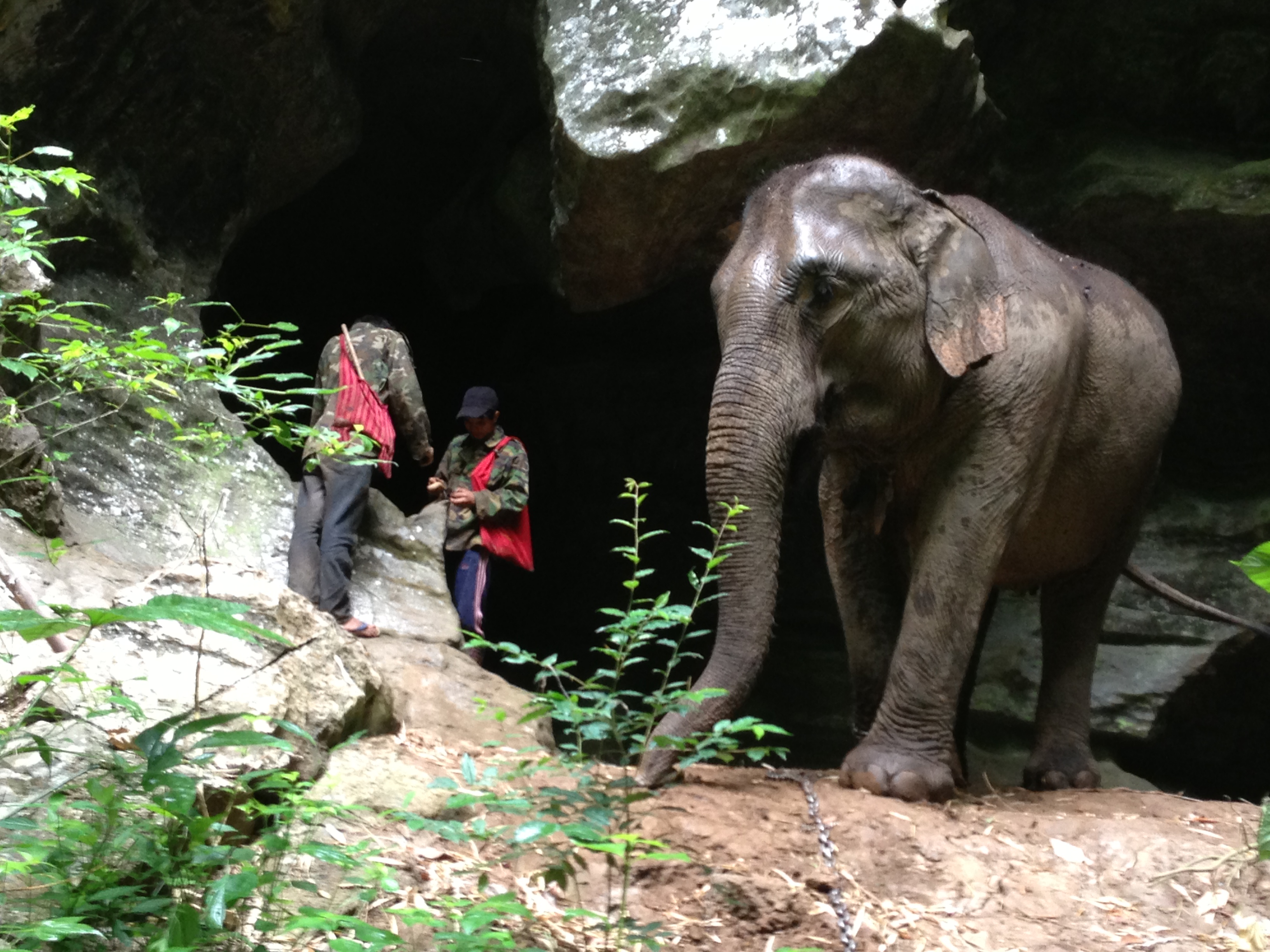
Mana.  Mana would turn out to be the most photogenic elephant.

Mana.

There are about 3000 domesticated elephants left in Thailand, down from 100,000 at the beginning of the twentieth century. The wild elephant population is down to about 3000 (or even as low as 1000 by some accounts) from 300,000 in the same span of time. This qualifies the Asian elephant as endangered.

Most captive elephants in Thailand are now in tourist camps, a $15 billion-plus industry. When logging was totally banned in Thailand in 1989, the elephant trainers/owners, or mahouts, turned to the tourist camps to make money. In tourist camps elephants usually undergo cruel and abusive ‘training’ to make them perform tricks, give ‘rides’, and pose for pictures.
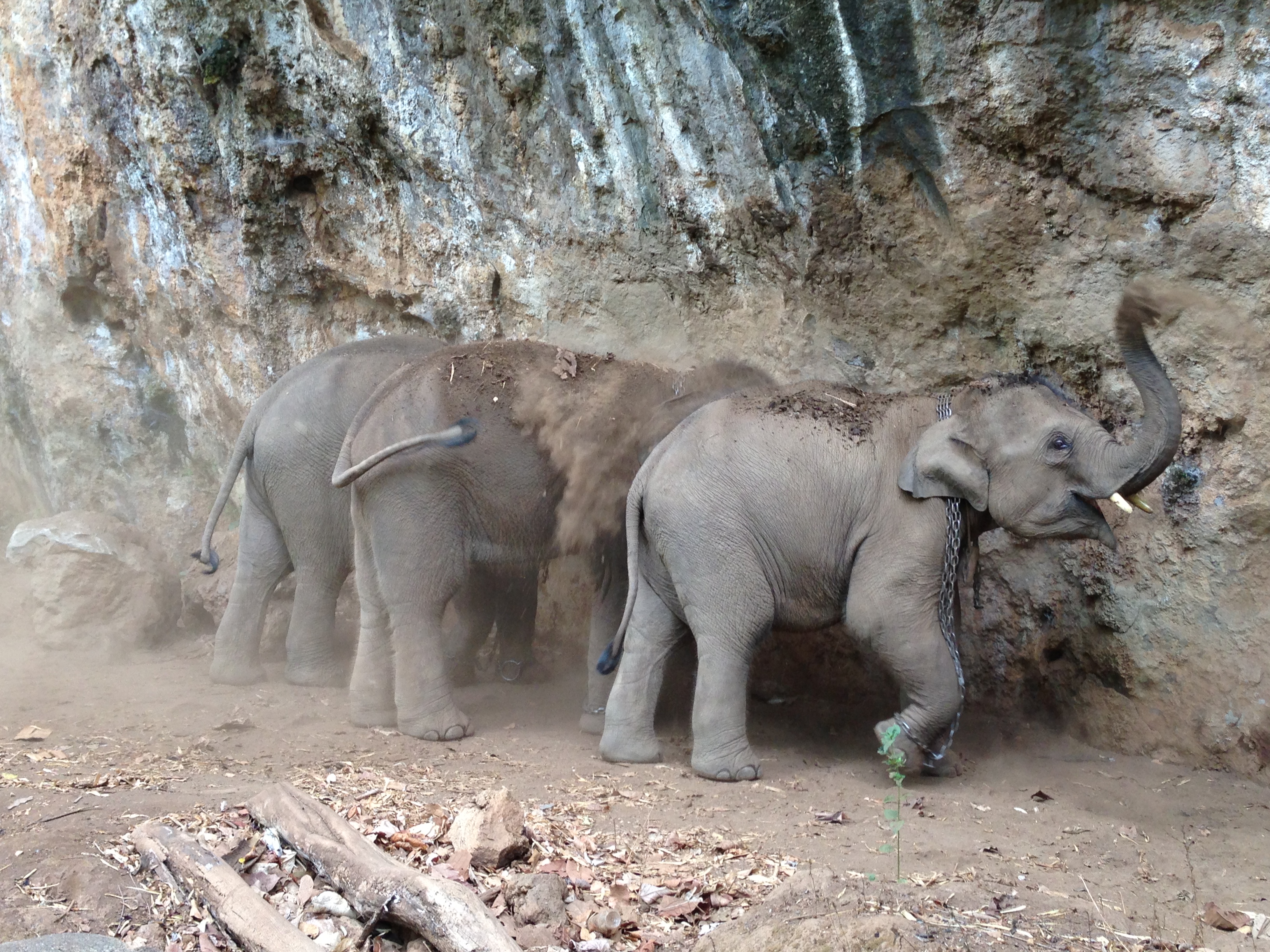
baby dirt bath

The babies give themselves a dirt bath. Dirt and mud protect the elephants from the sun and keep them cool.

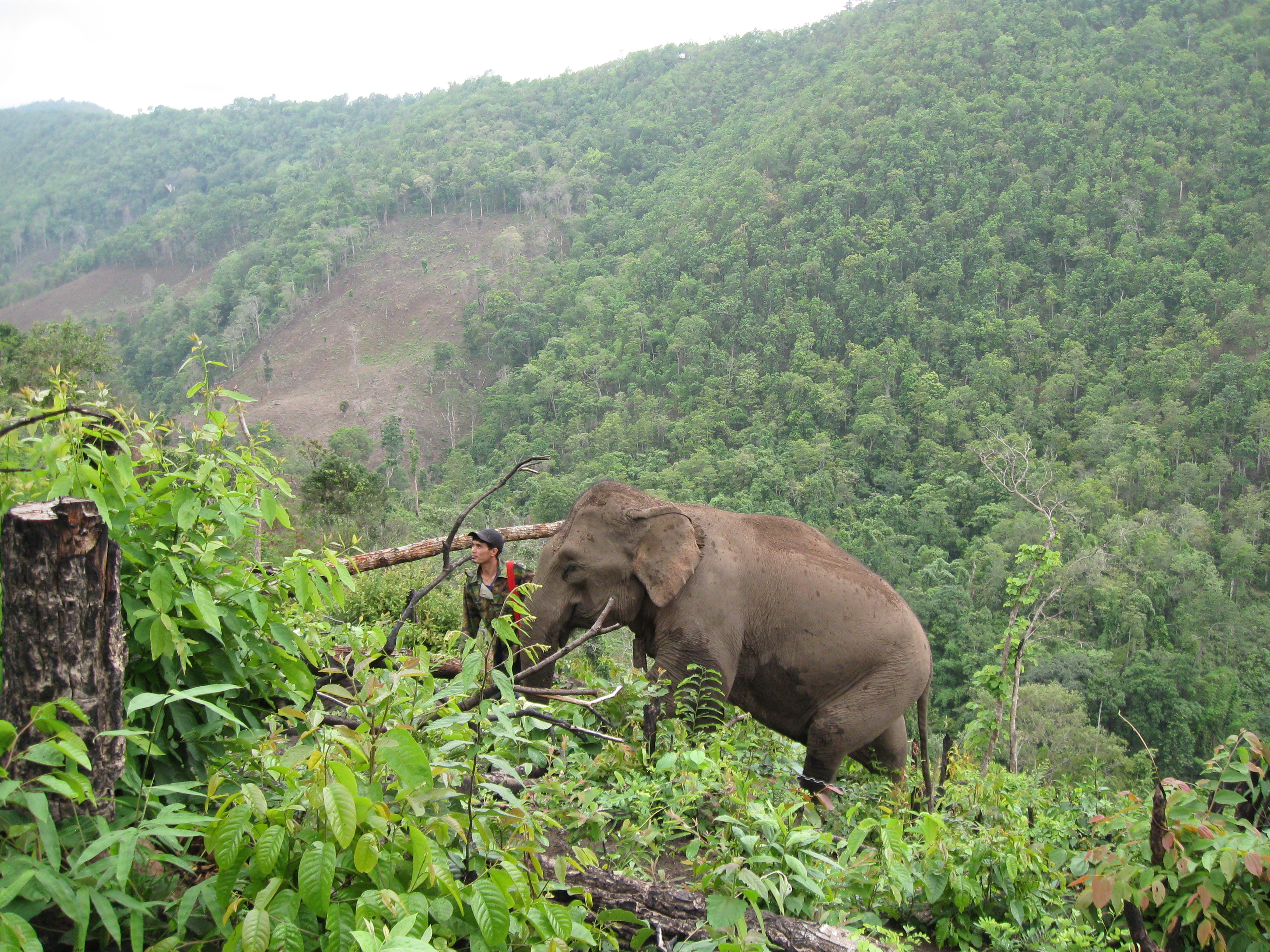
In Huay Pakoot the elephants won’t have to do any of that. Neither will they be forced to paint, play soccer, or beg in the streets. They will never be completely wild, either. They are here and the mahouts are here because people like me are paying to visit the village and follow the elephants around as they forage in the jungle. The goal is to turn the business of this paid volunteerism over to the people of the village itself. That’s in the future.

In the meantime, the mahouts get paid a wage comparable to what they would make if they took their elephants to the tourist camps. So the real benefit to the mahouts in this program is not the money, but the opportunity to stay at home with their families. The elephants get the best deal, since they get a chance to live better lives, free from abuse and servitude.

In Huay Pakoot, there are eight elephants in this man-made herd. The oldest are Tong Dee and Kam Suk, both in their mid to late 50’s. Kam Moon is Kam Suk’s female offspring, she’s in her 30’s. Then there’s Mana and Sen Jap, also in their 30’s.
Mae San Jep.  The 'Mae' means 'Lady'.

Mae Sen Jap. The ‘Mae’ means ‘Lady’.
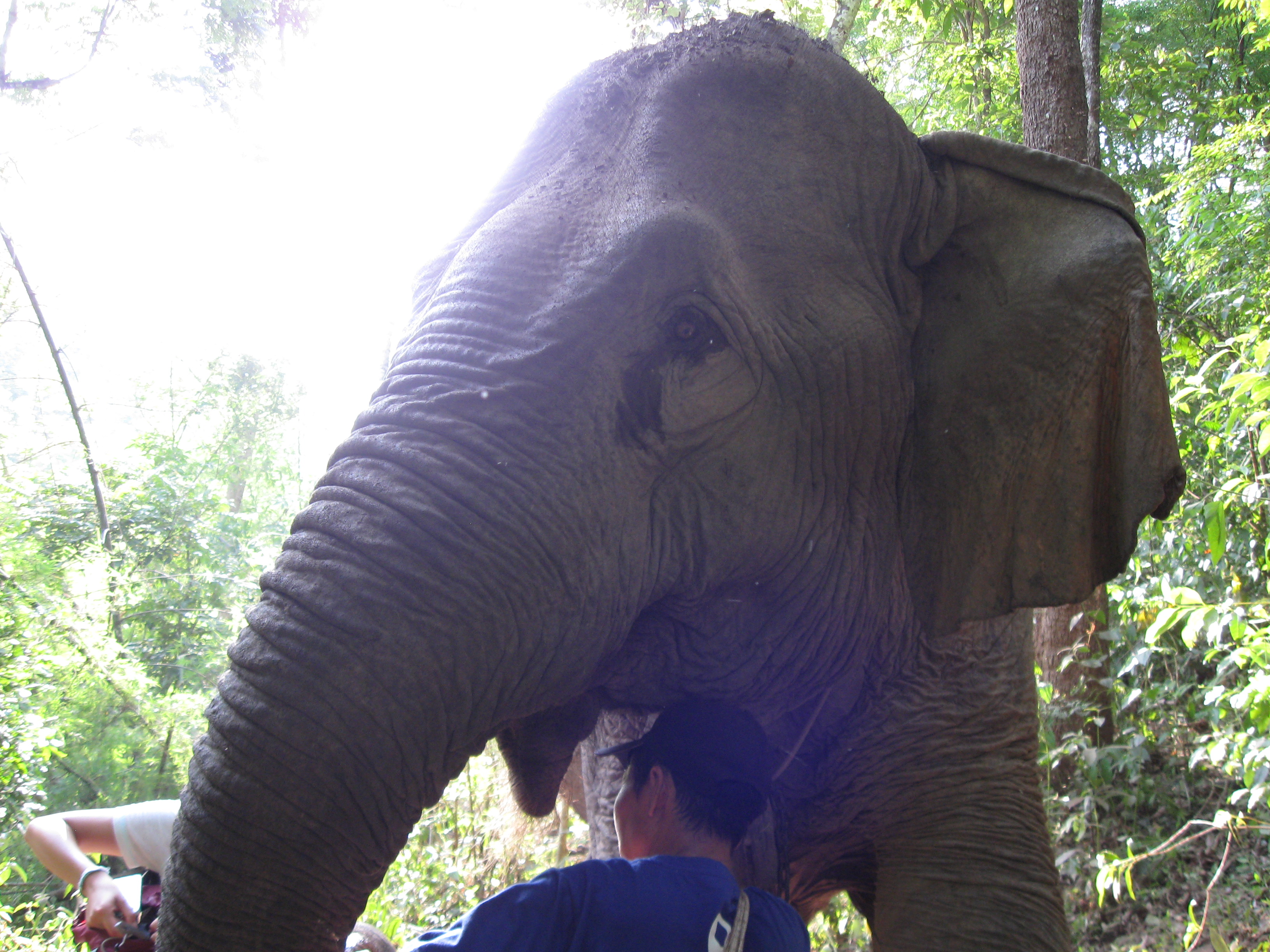
Tong Dee.  She was exploited for logging until it was outlawed.
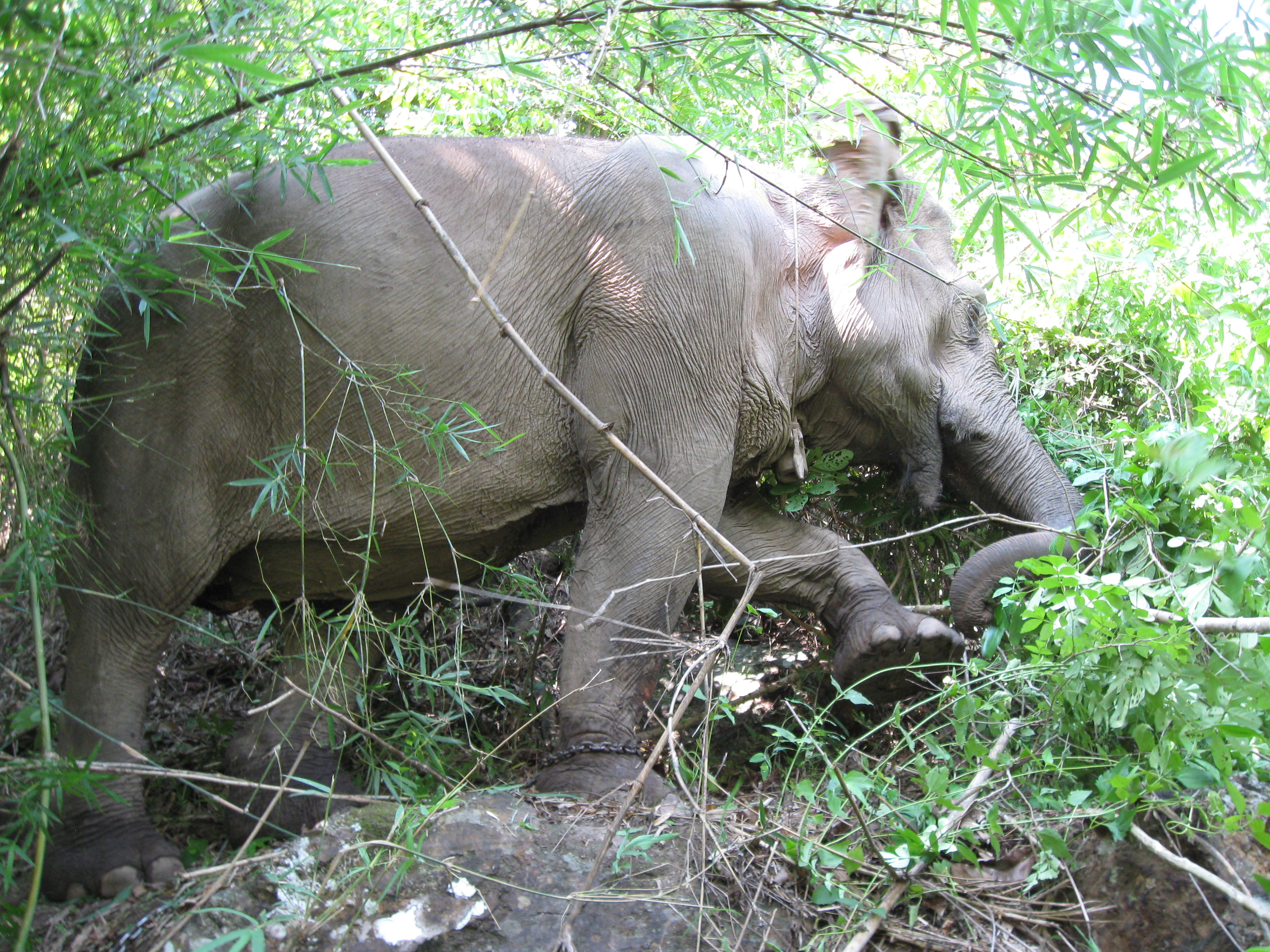
Tong Dee. She was exploited for logging until it was outlawed.

Kam Moon.  The largest elephant of the herd.
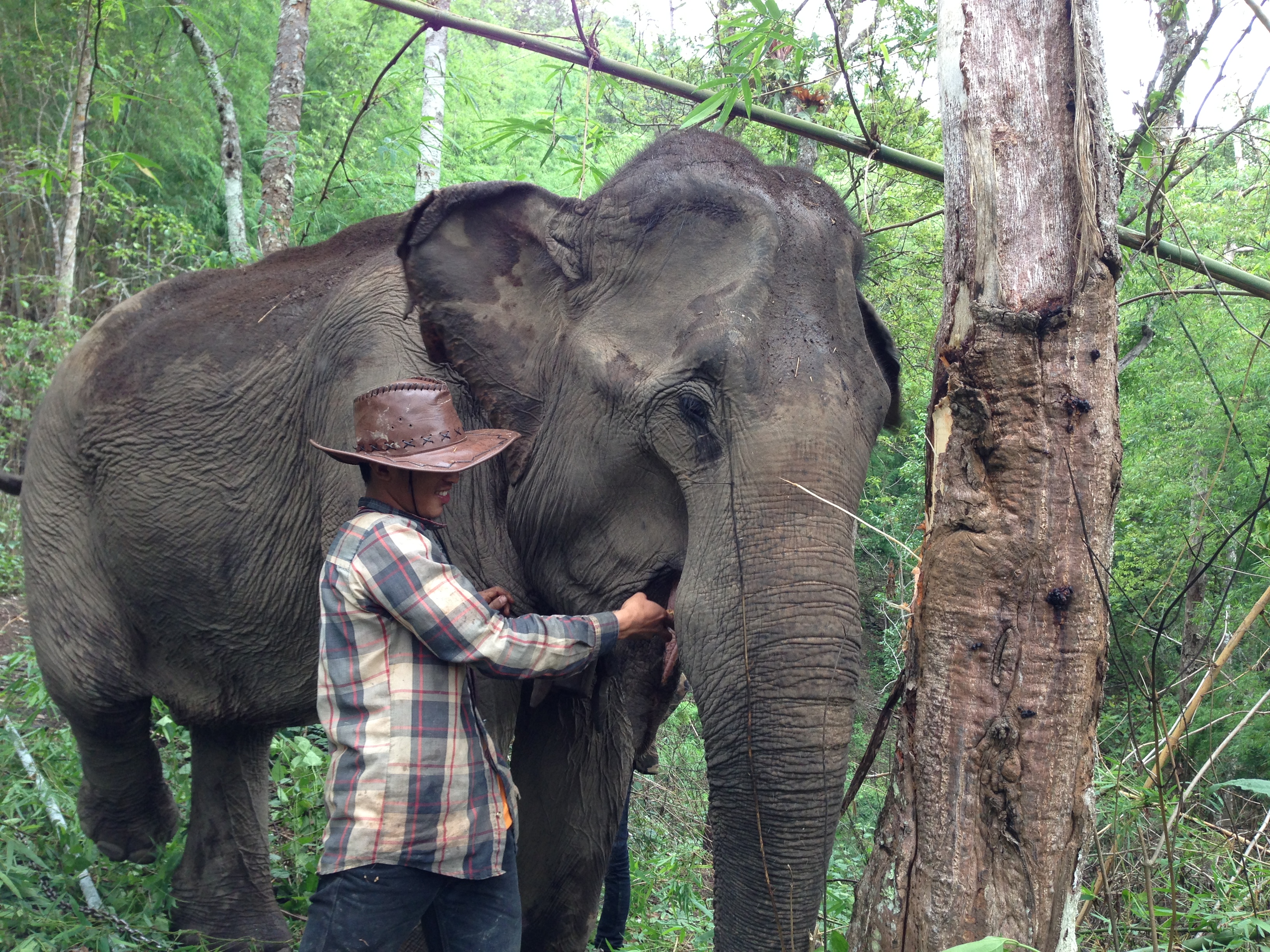
Kam Moon. The largest elephant of the herd.

Kam Suk.  Her mahout is feeding her bark.

Kam Suk. The oldest elephant of the herd. Her mahout is feeding her bark.

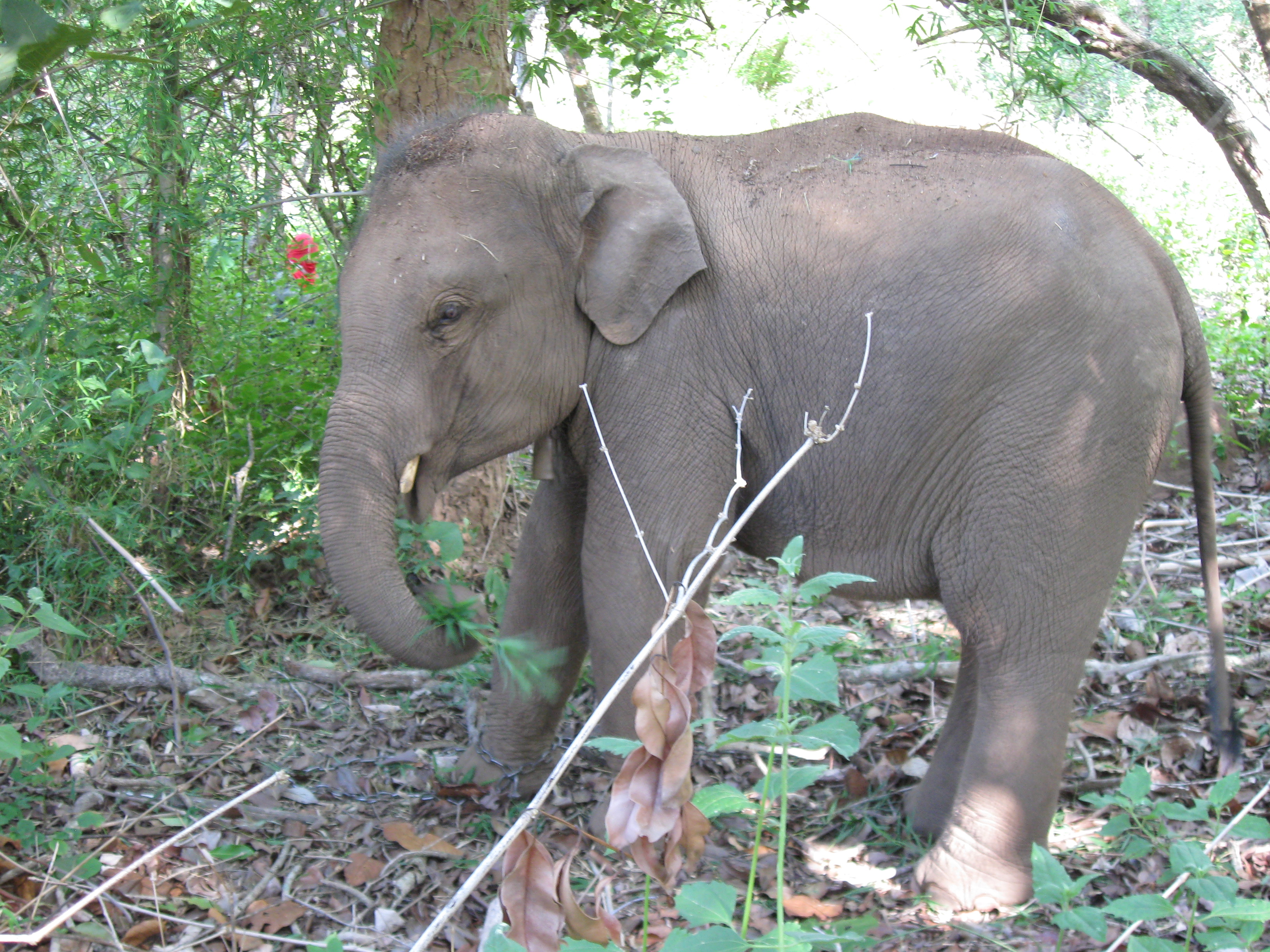
There are three baby elephants: Bpee Mai, Mario (the only two males), and Lulu. They are five, four, and three respectively. Kam Suk, Kam Moon, and Lulu, three successive generations of elephants (Lulu is Kam Moon’s offspring), are brand new additions to the herd, and they have been here for only a couple of weeks. All the elephants are from tourist camps except for Tong Dee, who was used as a beast of burden for logging. Lulu has never been in a forest until only a couple of weeks ago.
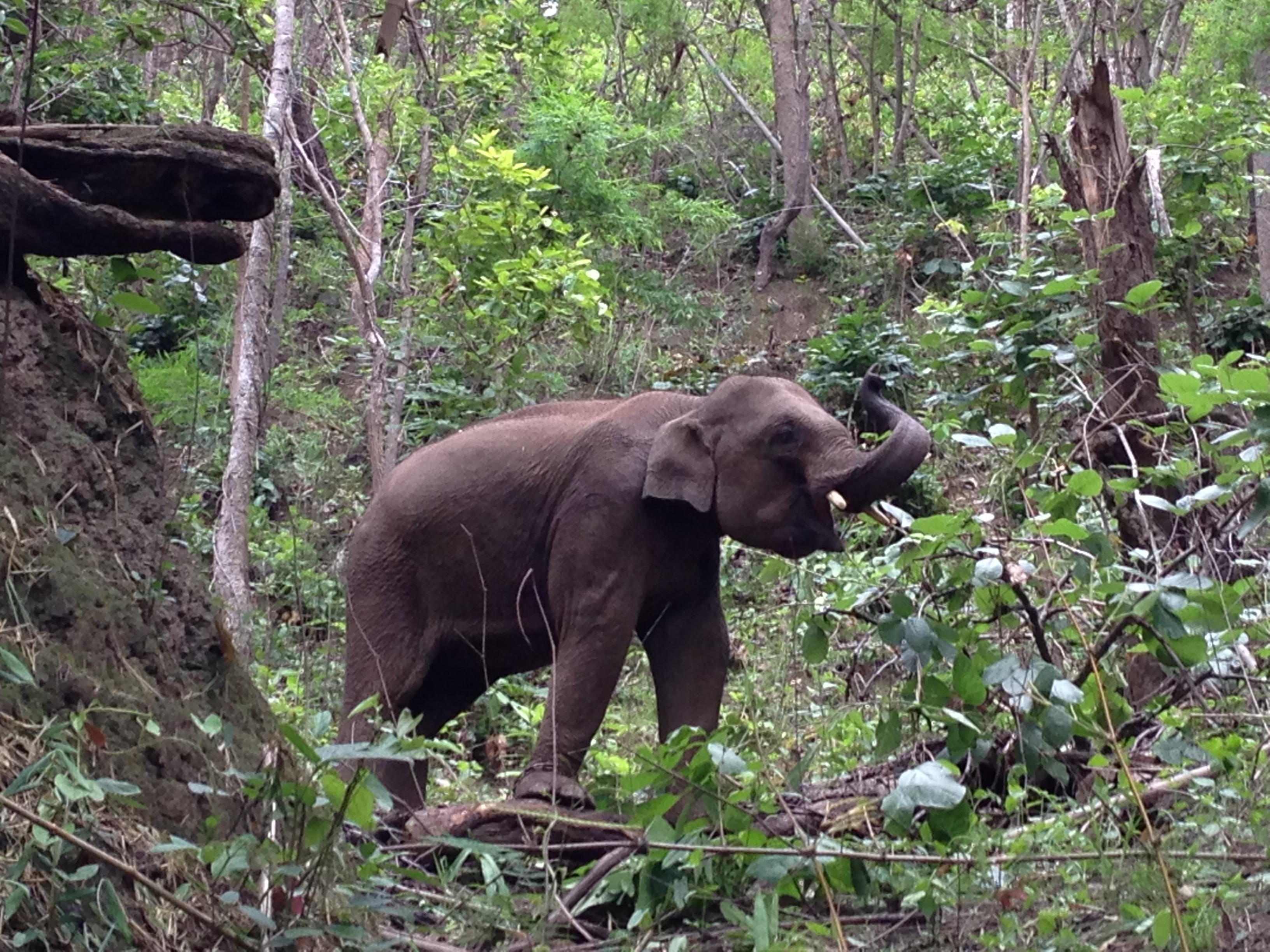
Bpee Mai.  He is the "veteran" baby, and the other babies often follow his example.
Bpee Mai. He is the “veteran” baby, and the other babies often follow his example.

cute Mario

Mario. Mario was always curious about us volunteers.
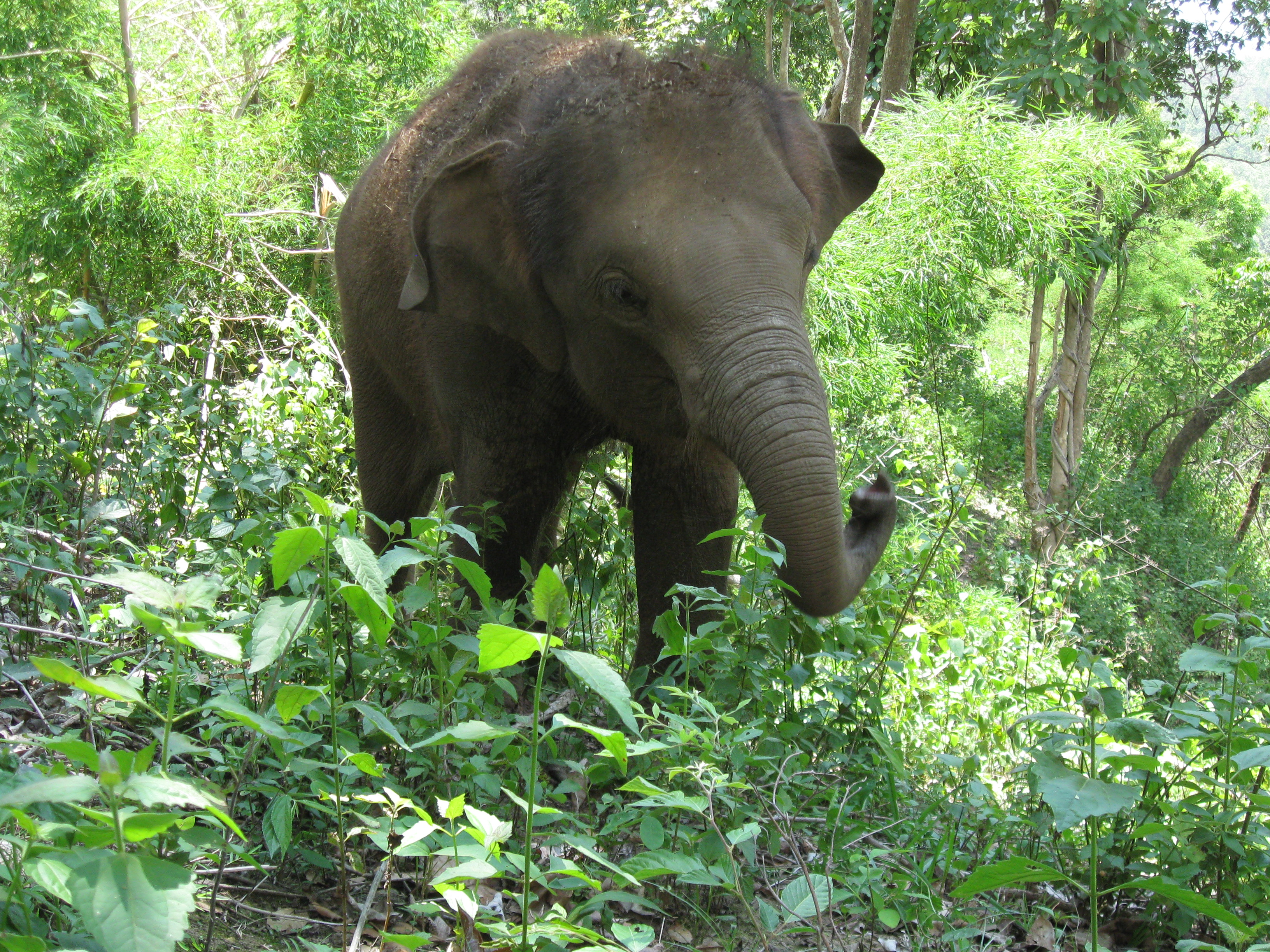
Lulu.  Lulu had never been in the forest until now.

Lulu. Lulu had never been in the forest until now.

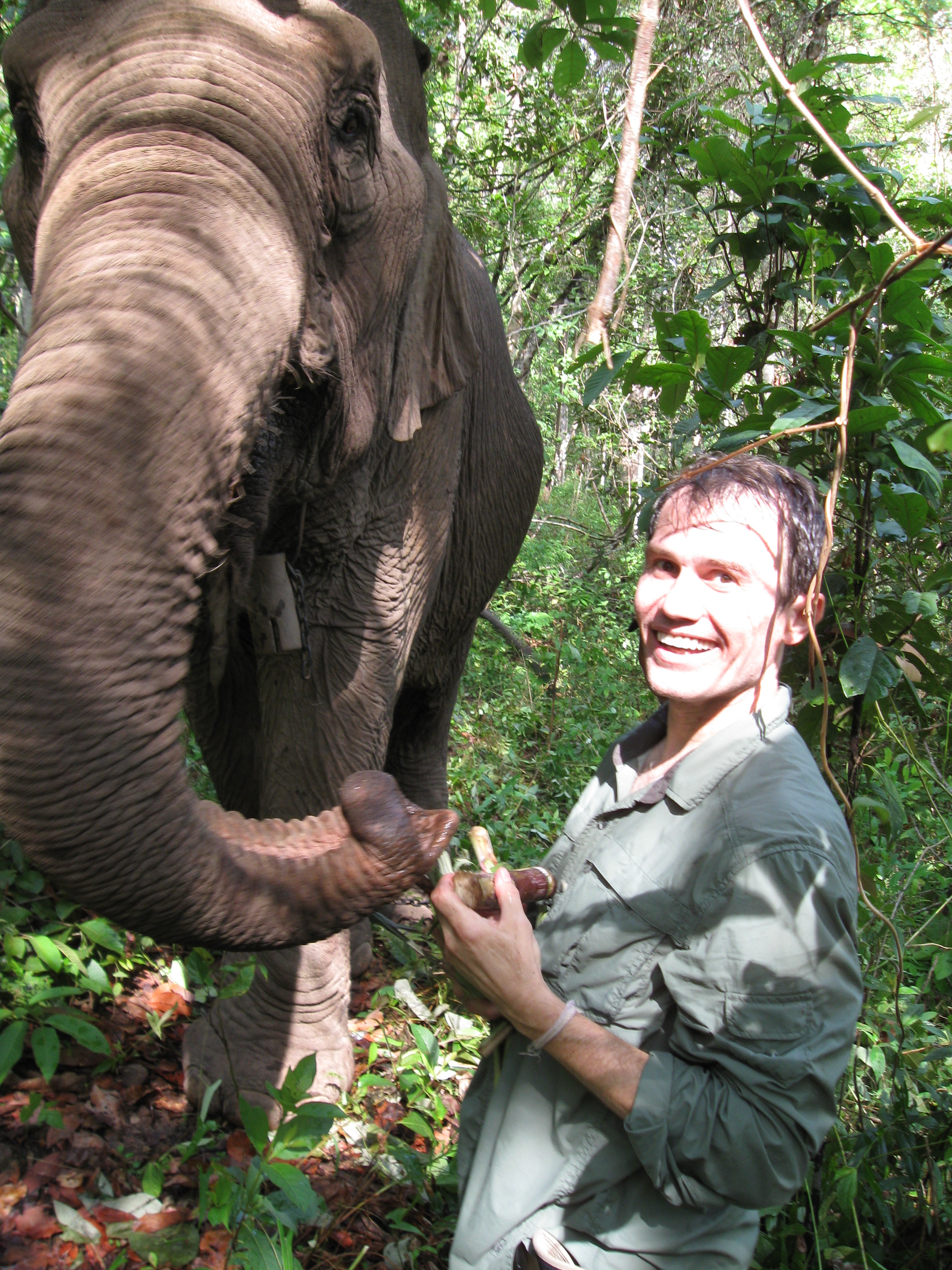
The first time I meet the elephants I am allowed to feed them, which is thrilling beyond belief. I feed Tong Dee, who looks the oldest, even though Kam Suk is slightly older. Maybe it’s all the hard labor Tong Dee has had to endure. Her skin is saggy and wrinkly, her eyes big and sad-looking. She nudges me with her trunk for the bananas in my hand. A nudge from an elephant is like a shove from a dock worker named Moose. Tong Dee snorts, chews noisily, her trunk poking at me for more. I stare up at her.
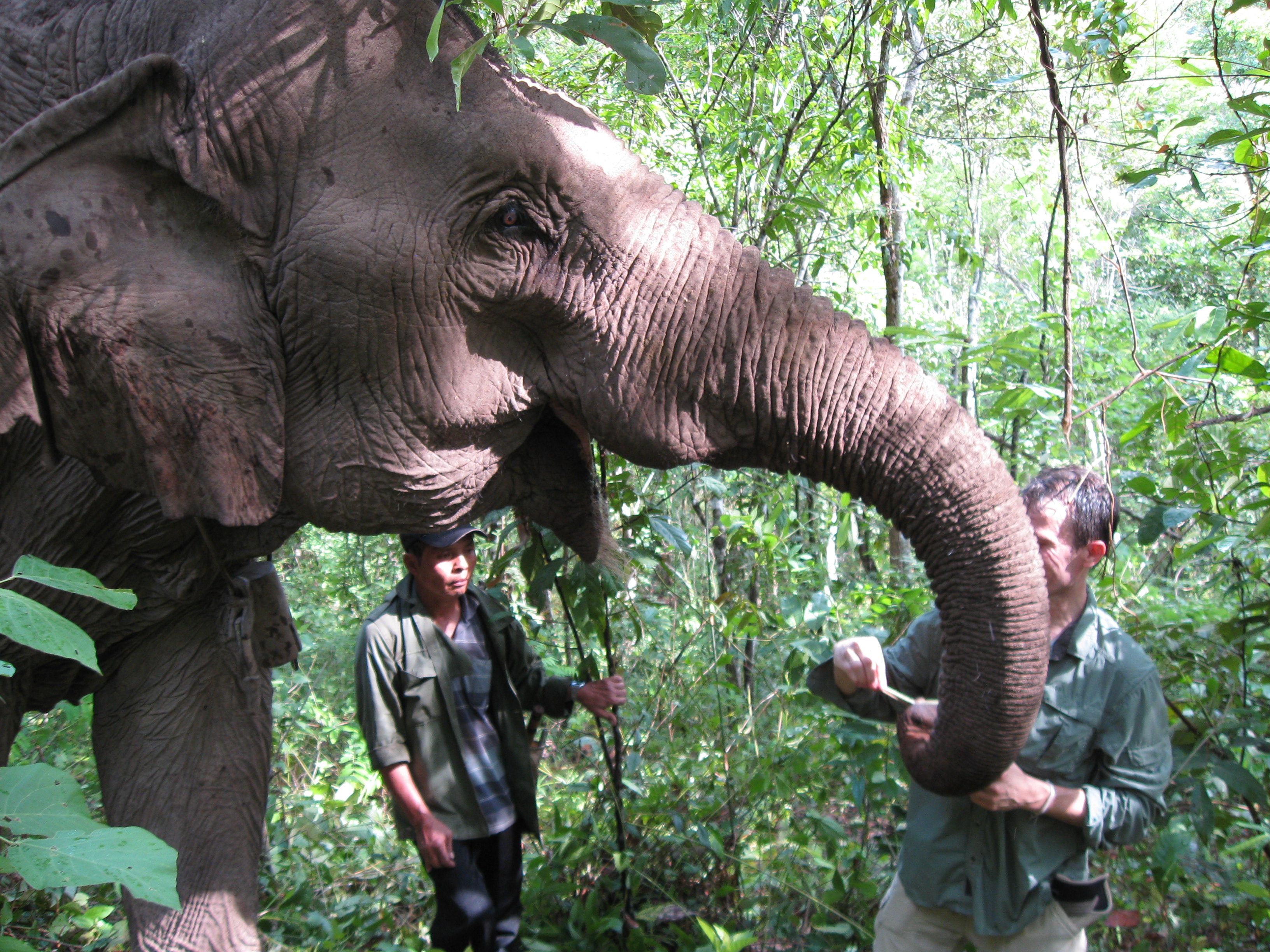
Feeding Tong Dee.  She became one of my favorites.

Feeding Tong Dee. She became one of my favorites.

In Hinduism and some other disciplines the god Ganesha takes the form of an elephant. He is known, among other things, as the Destroyer of Obstacles.

Later I see the photos of me feeding Tong Dee and I don’t recognize them. There is a strange smile on my face that I have never seen before. It’s like I’m looking at a different person.

I will snap hundreds of photos and videos of the elephants, but every one seems to fall short of what it’s like to actually be in the presence of one. When you see one up close and in person—and not in a zoo cage– you feel like you are looking at an animal not of this time, as if you are suddenly seeing a dinosaur stomping out of the forest.

Elephants are massive, slow, deliberate, and surprisingly quiet. Take your eye off them and they will surprise you. More than once I will pick out an isolated jungle observation post from which to safely view the creatures from a distance, only to turn around to find an elephant on top of me.

They forage at their own, relaxed pace, hoisting their trunks up like periscopes to periodically sniff the air. They are curious about us and they touch and smell each other. They snort when eating, trumpet when frustrated, squeak for who knows why. It is alarming to hear rodent sounds (albeit a large, steroid-gobbling rodent) coming from the belly of such a massive beast. They even growl when agitated or giving warning, but it’s not like say a big cat growl. It has a basso profondo rumble to it, like a giant awakening from under the earth.

Seventy percent of the day they spend eating, so they do a lot of that. Sometimes they take a few steps and just stop, pausing, eyes darting, trunk gliding a few inches off the ground. With their tufts of hair at the fringes of their lumpy heads, they look to me then like wise old men lost in thought. Every time I am near one I am struck with a sense of peace and awe.
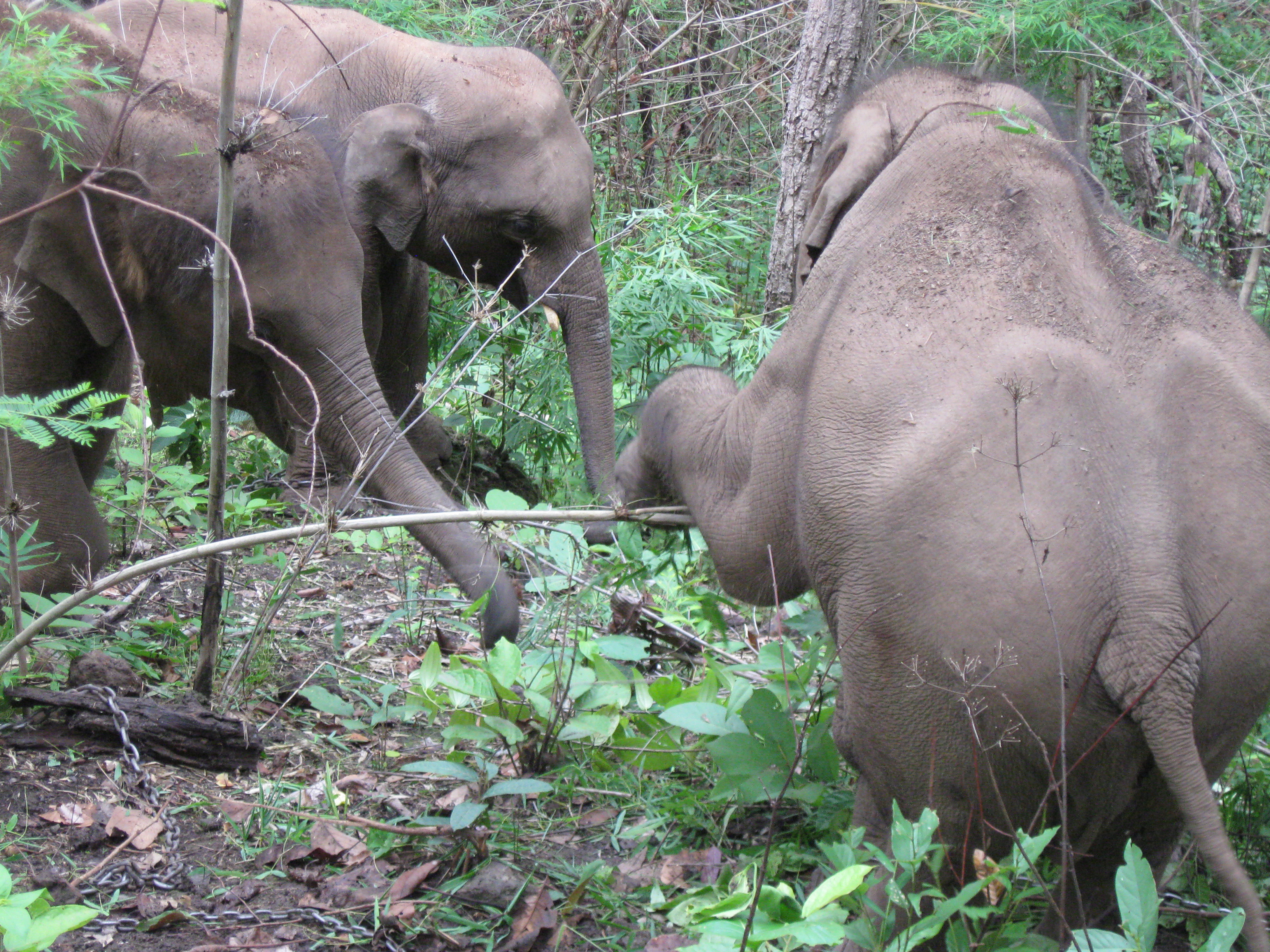
Mario stomps on a tree branch to make it more bite-sized.
Mario stomps on a tree branch to make it more bite-sized.

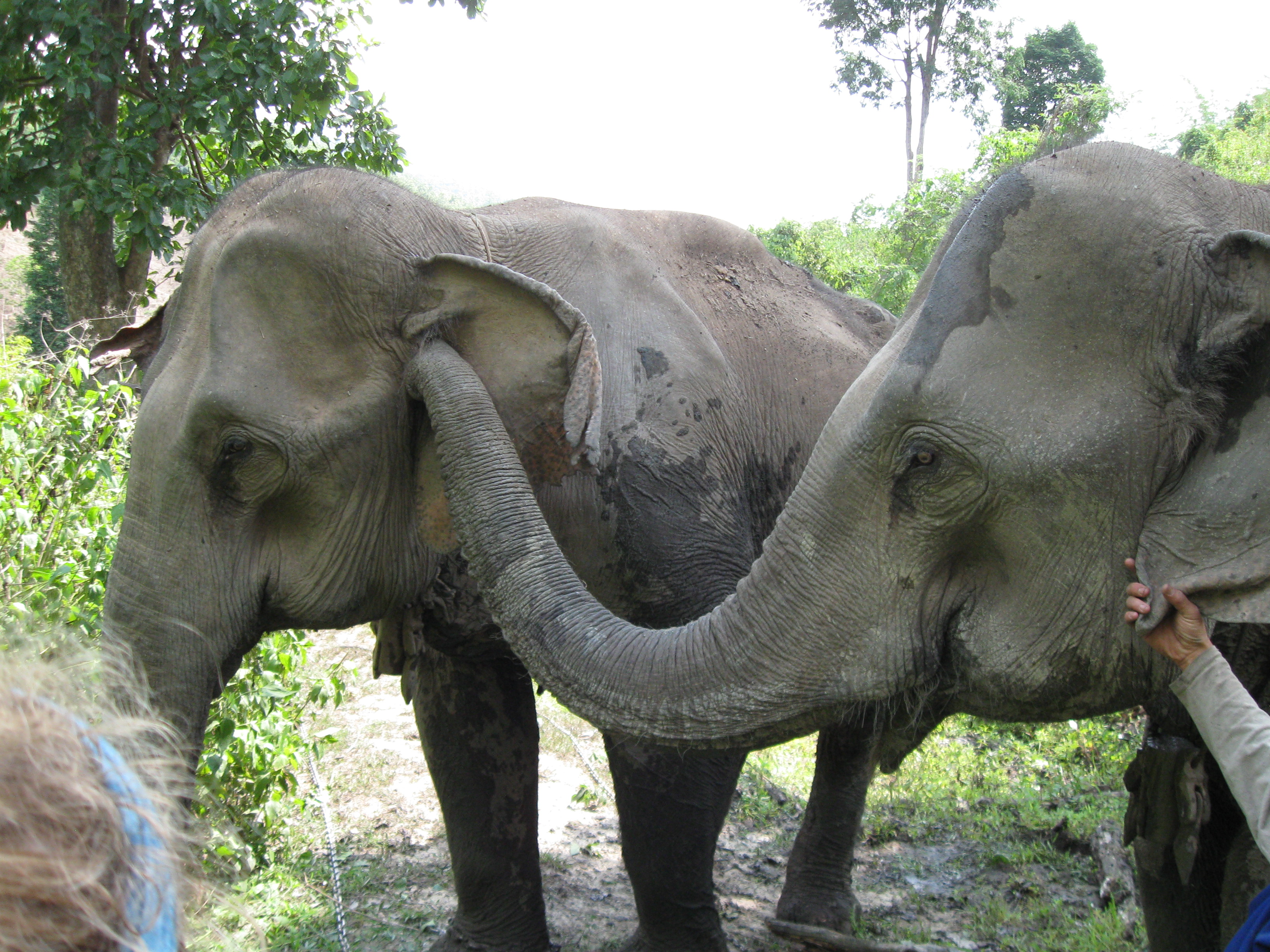
Kam Moon touches her mother, Kam Suk.  Kam Moon never strays far from her mother.

Kam Moon touches her mother, Kam Suk. Kam Moon never strays far from her mother.

Each day there are elephant hikes, some longer (six hours generally), some shorter (about four hours). I go on all of them. This alone keeps me busy, and there are many other things to potentially do, including attending lectures, teach English to the children or the mahouts of the village, help my host family cook, weave baskets, and more.

In 2010 I quit smoking. I had smoked for over twenty years before quitting. Up until this week I had still been chewing Nicorette nicotine gum, usually two pieces per day. I had debated whether to buy another box before I left because I had counted them all out (as an addict will do), and had almost exactly enough for the whole trip, if I kept on the two a day dose.

Quietly, almost without me noticing, I stop chewing the gum. I don’t miss it. I am among the elephants every day and I am thinking about the phrase, Destroyer of Obstacles.
Who is this man?
Who is this man?

THAILAND ELEPHANTS WEEK ONE, PART TWO: BLOW-DRIED CHICKEN

In week one I eat my first meal prepared by the matriarch of my host family, Apah. She is told that I am a vegetarian. No eggs, either. She laughs, and after a translation, I am told she has said in her language: “Then what do you eat?” Throughout my stay she smiles, laughs, and tries to joke with me. Despite the language barrier, I understand her warnings about the low ceilings everywhere in her house.

At six o’clock every day I arrive for dinner, and every day I bonk my head on the low ceiling. Apah rolls out a rug onto a sort of porch area of her house. It begins to sink in that there is no furniture anywhere. People in the village sit on the floor to eat, relax, hang out. There is a lot of squatting. Tigers used to prowl the jungle here fifty years ago. After they were hunted into extinction, it looks like everyone went after the chairs.

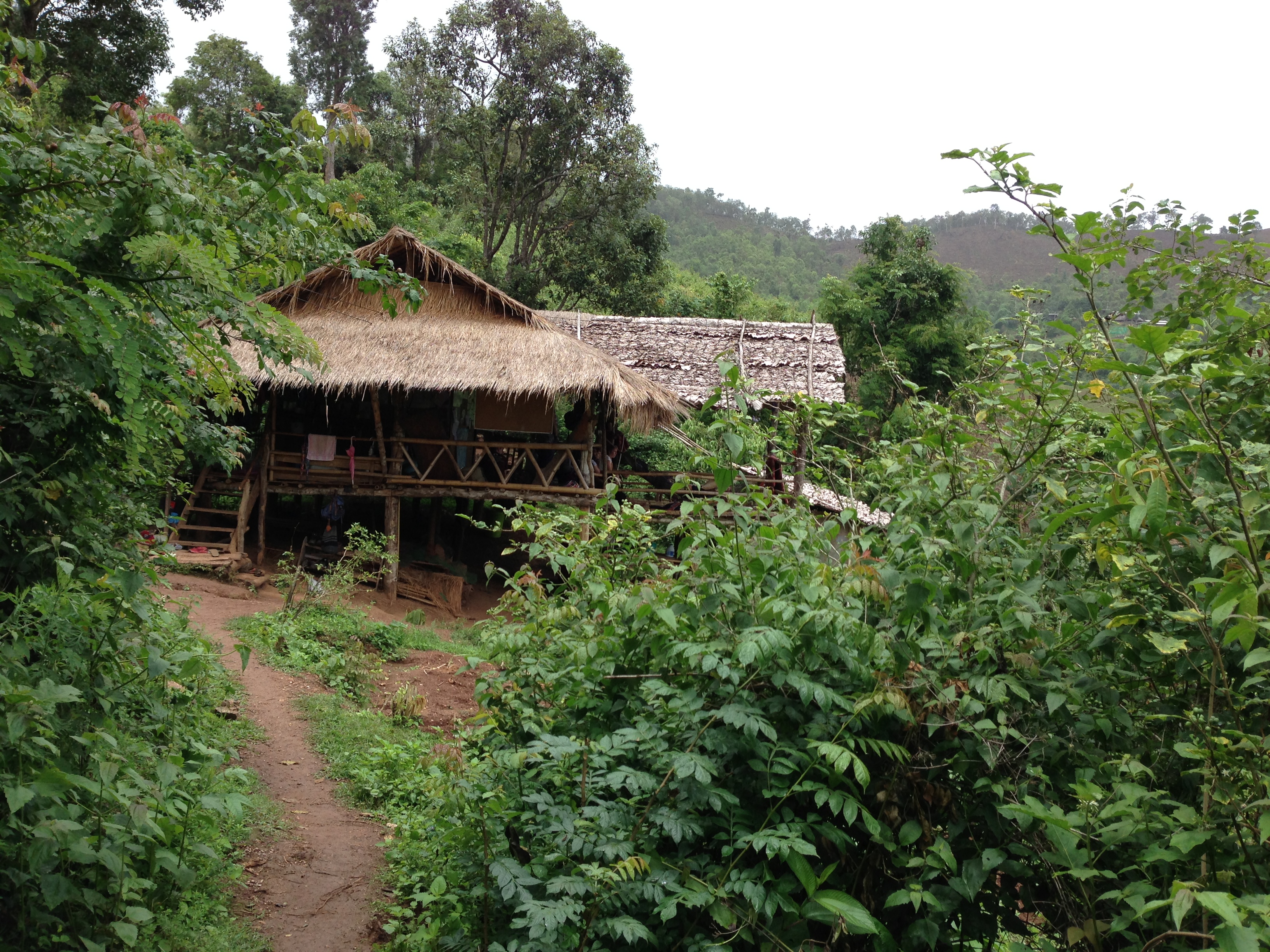
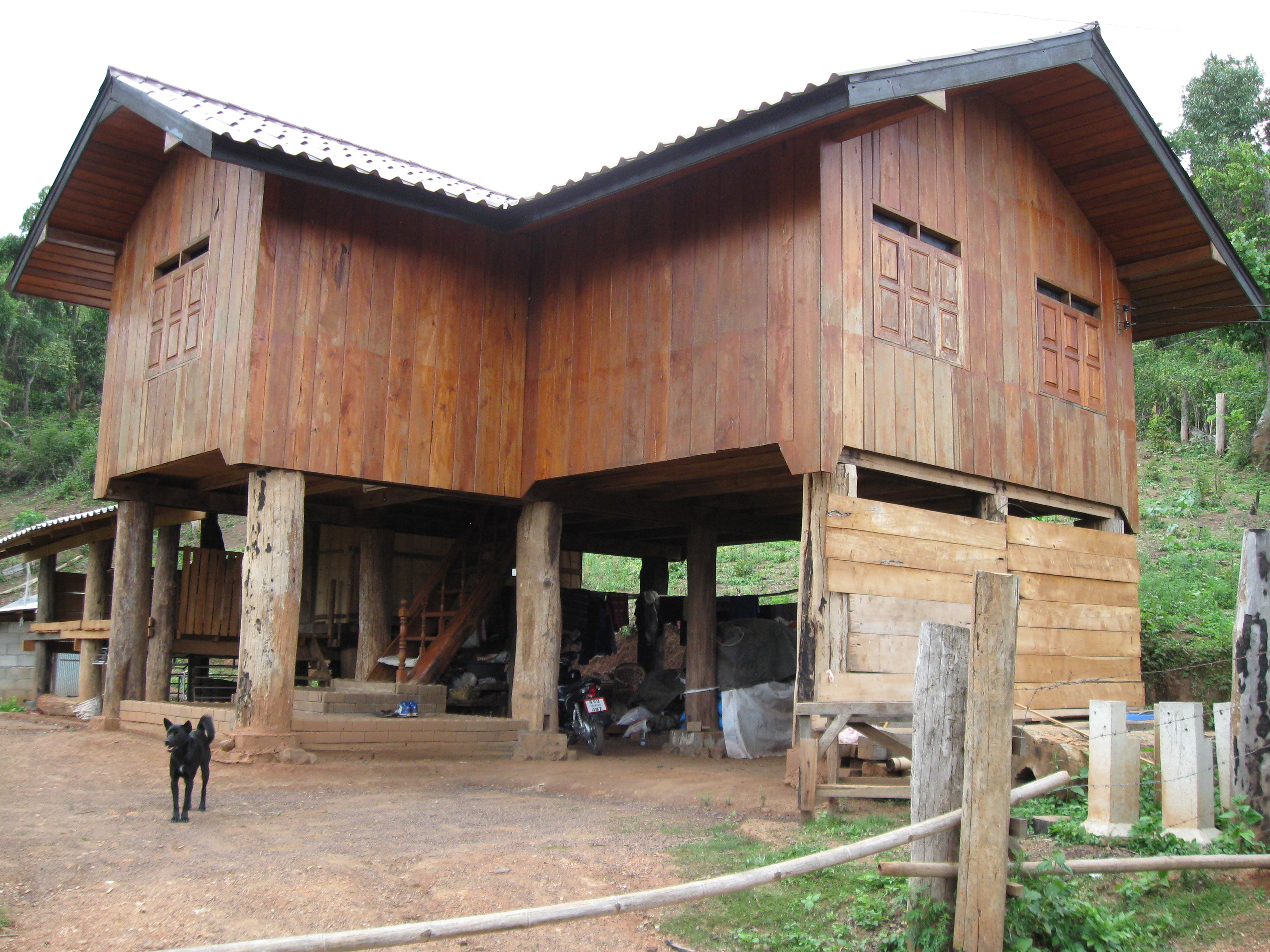
My host family's house

My host family’s house

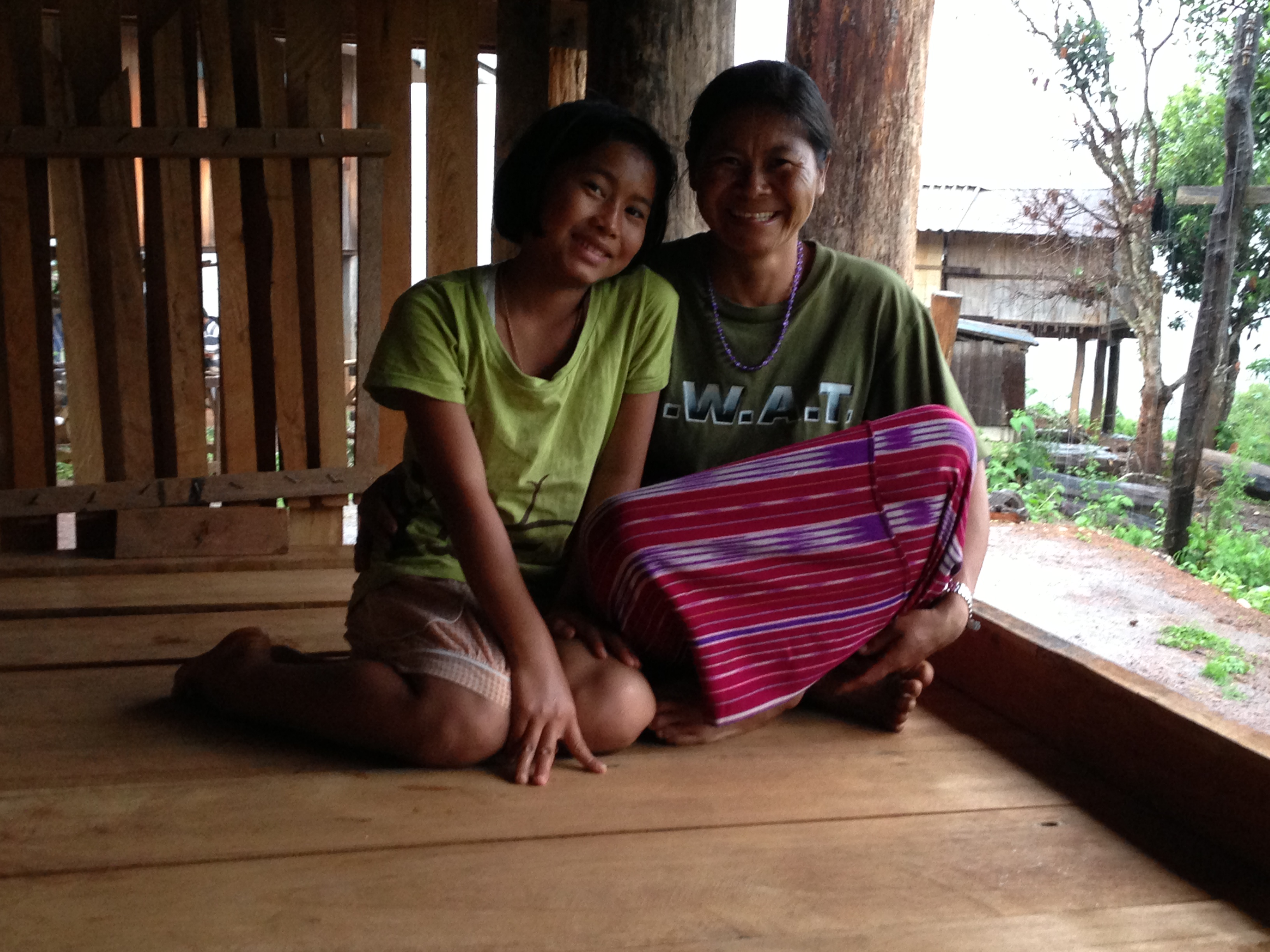
Apah and her daughter, Tee Ta Poh.

Apah and her daughter, Tee Da Poh.

I love Apah’s cooking, and from this vegetarian’s perspective the key to the food is not necessarily what it is, but how it’s flavored and spiced. Some of my favorite dishes are spiced potatoes, spiced pea puree, spiced peppers (perhaps you’re seeing a theme here), and sometimes Apah makes a cold paste out of red chilies that goes well with anything. Occasionally there is fruit, usually mango, pineapple, or watermelon, which is delectable and balances the other dishes well.

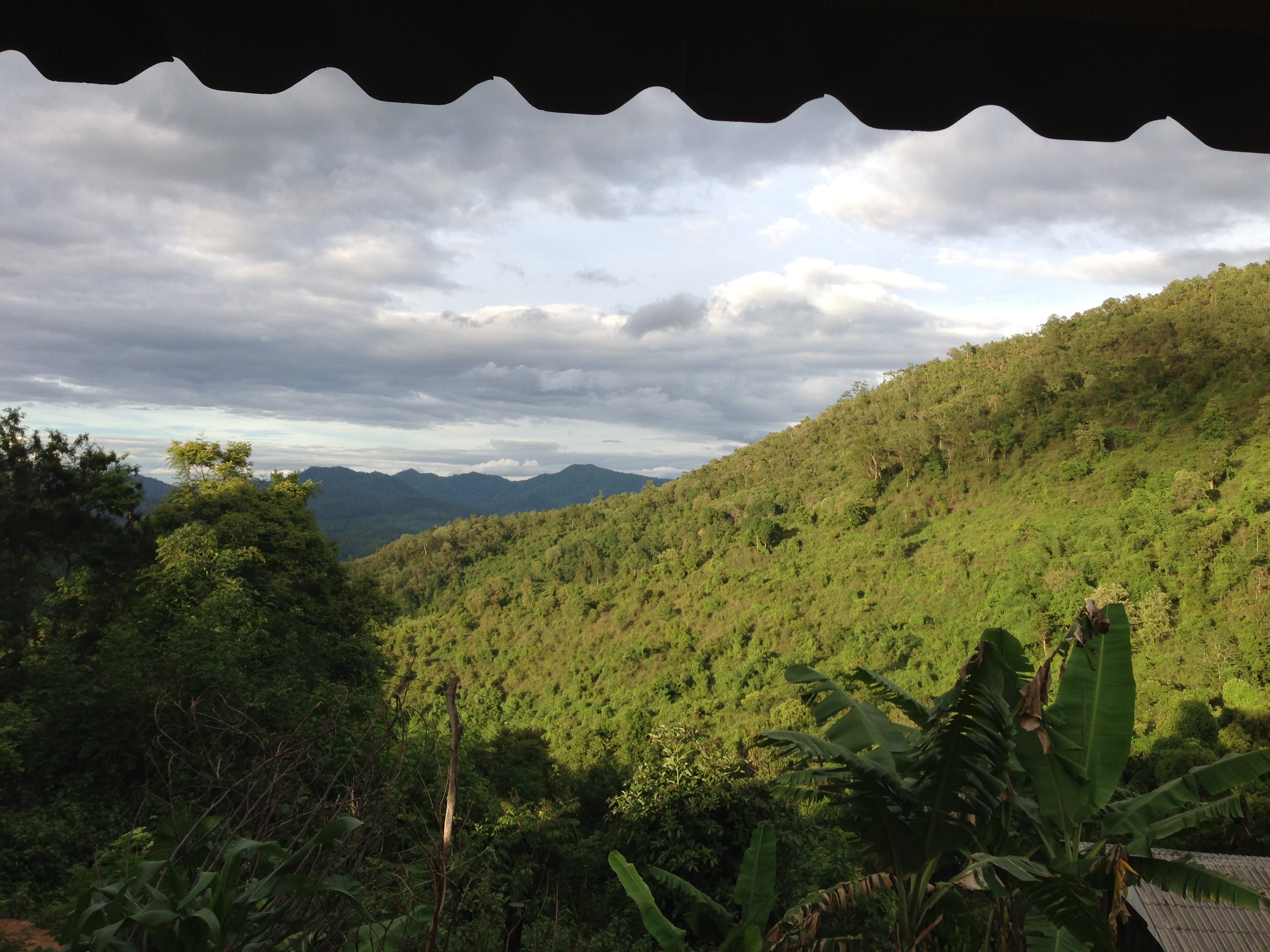
I have a striking view of surrounding mountains from where I eat. During this first week, a staff member eats with me and my family. After that I will be on my own, so I can either try to learn some of the language, or go the other way and just get down some really cool blank stares and grinning idiot poses.

The staff member knows a lot of Packinyah, which is the native language spoken by the Karen people that live here. As the staff member and my host family converse in fits and starts, I write down as many words as I can and practice pronouncing them. Packinyah is not a written language, so I write down the words phonetically. It’s hard to figure out grammar rules. A lot of it sounds like some weird version of French, like if Pepe Lepew had invented his own language.

One phrase I manage to get down is ‘Da bleu!’, which is a good all-purpose phrase, since it means hello, goodbye, and thank you. One little wrinkle is if you slightly mispronounce it, if you say ‘Ta bleu!’, you are calling the other person crazy. After a few days I’m da bleuing all over the place.

My view while eating dinner

My view while eating dinner

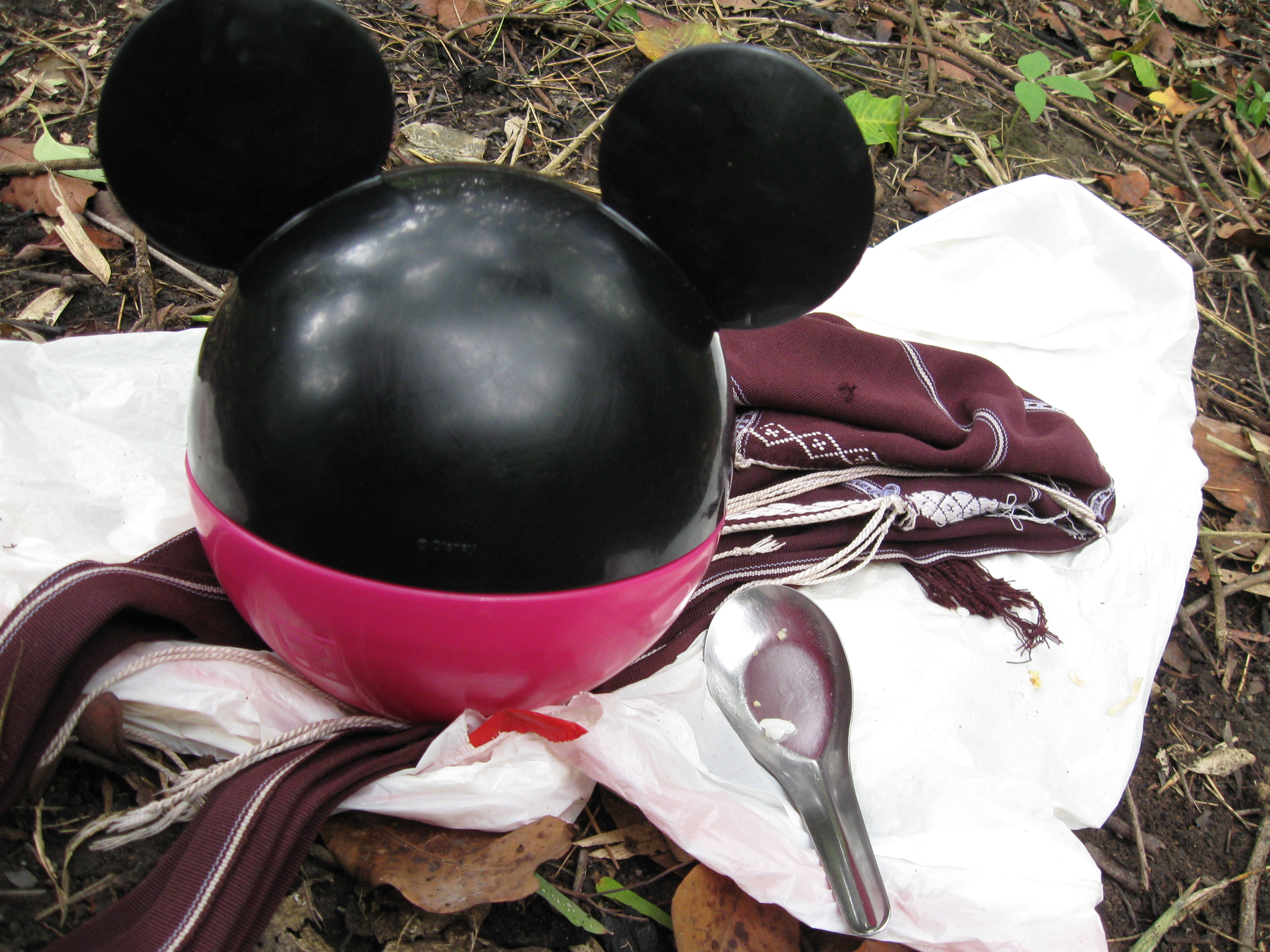
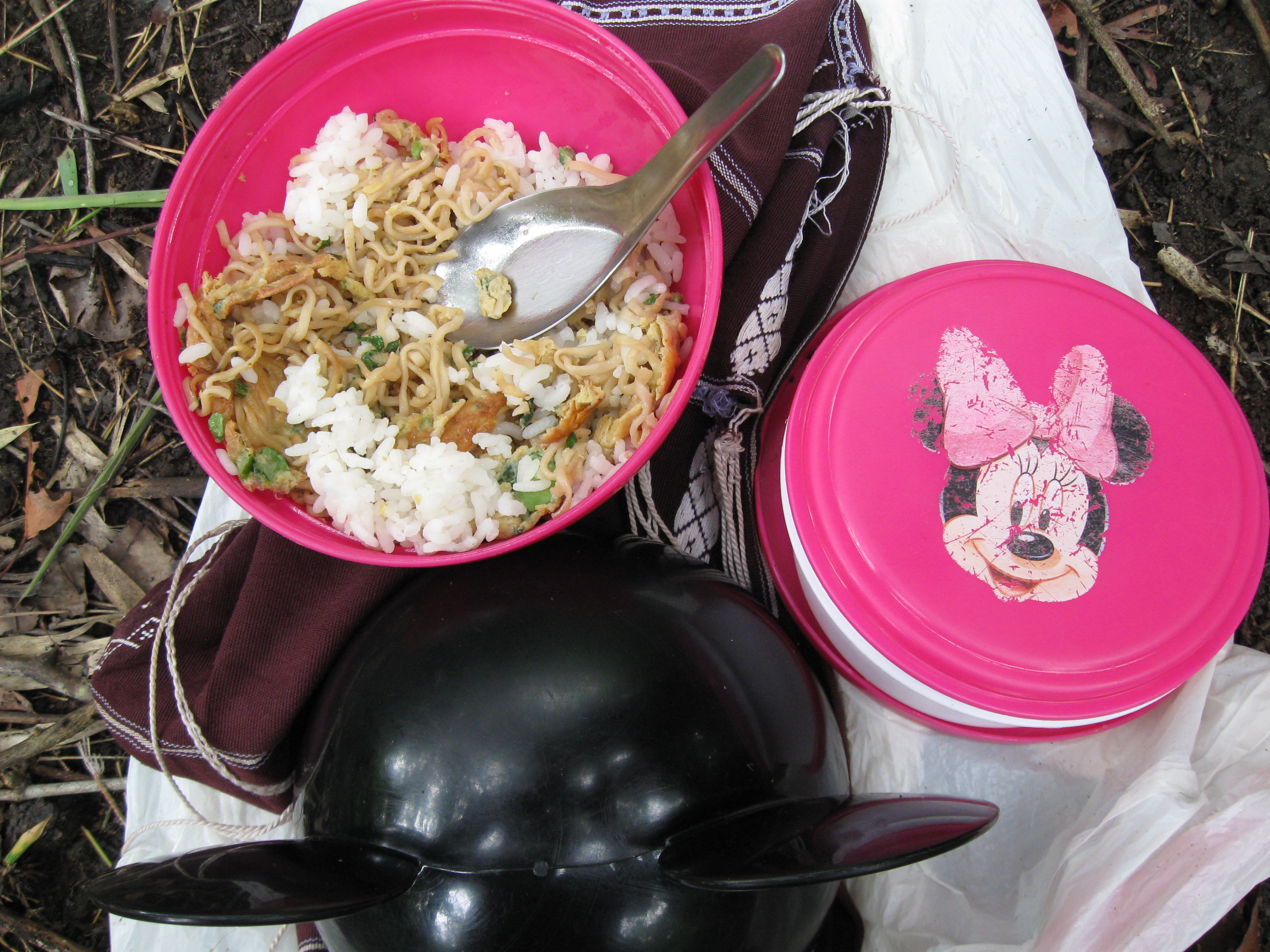
Apah packs my lunch for the day hikes in a pink Minnie Mouse plastic container. Breaking out a Disney lunch box in the jungle is a bit off (another British expression, I can’t stop myself), like if I clopped into a Disney board meeting with hiking boots and a backpack. (That might be my next trip.) All the other volunteers are jealous of my Minnie Mouse container, and they should be, with their plain no-mouse-eared food containers. I am very proud of it, beaming as I unscrew Minnie’s head. Lunch is eaten cold, either out in the jungle on the hike or at base hut if the hike is shorter. The food is good no matter what, even if you imagine it’s Minnie’s little mouse brains, which I would never do.

Minnie pre-lobotomy

Minnie pre-lobotomy

Canon_June 28 151

And post-lobotomy

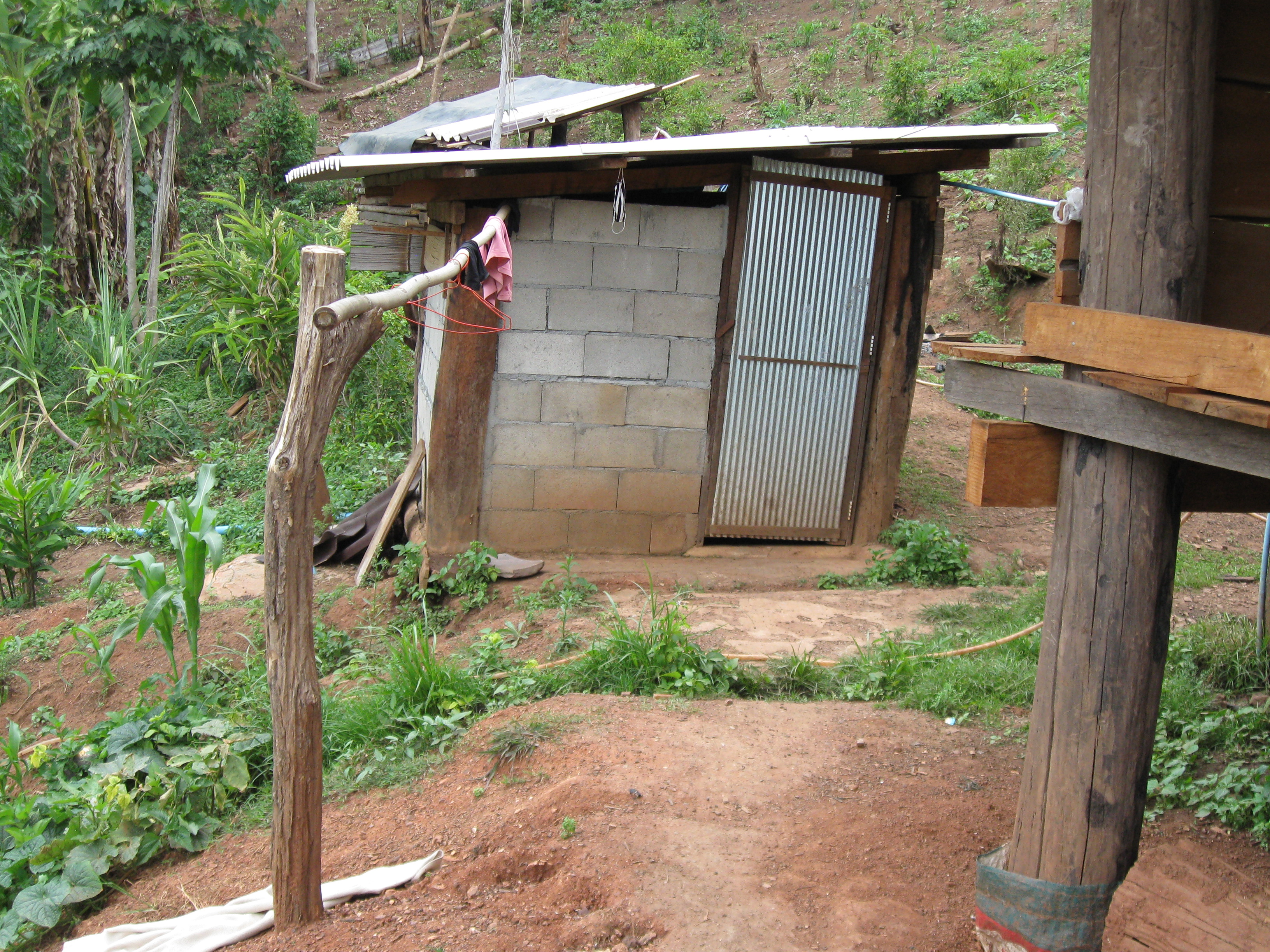
The bathroom facilities are in a separate building from my host’s house, in what is for all practical purposes an outhouse with ‘shower’ facilities. So, Outhouse-Plus. Here I am introduced to the squat toilet. This is a happier meeting than I expected–I thought I would be actually crapping down a hole. It is at least a toilet, made of porcelain, and even imprinted with the manufacturer’s name. ‘Otto’ is the manufacturer. Strangely, in the city, the toilets are imprinted with ‘Cotto’. The brothers Otto and Cotto, twin toilet titans of Southeast Asia. The toilet is set into the floor and the squatting takes some getting used to. I consider it a victory that I somehow escape crapping on myself.

The ‘shower’ is a big barrel of ice cold water in the corner across from the squat toilet. A little plastic pot is used to scoop up the water and pour it over myself. I start the week ‘showering’ (you can substitute ‘dump arctic water over my head’ if you like) once in the morning, and once after the hike.

Outhouse-Plus

Outhouse-Plus

By the end of the week I shower only after the hike. Morning showers are bracing but pointless, since I am clean for all of thirty minutes before the hike begins. They do get my attention. I stifle a shout as the poured ice water bashes me like a baseball bat made of ice. This feels great after a hike—or at least less like electroshock therapy–but only if I walk directly from the jungle into the shower without breaking stride. If my body temperature cools down even a little while I’m hunting down soap, towel, fresh clothes, etc.–then I will suffer an ice cold water beating once again.

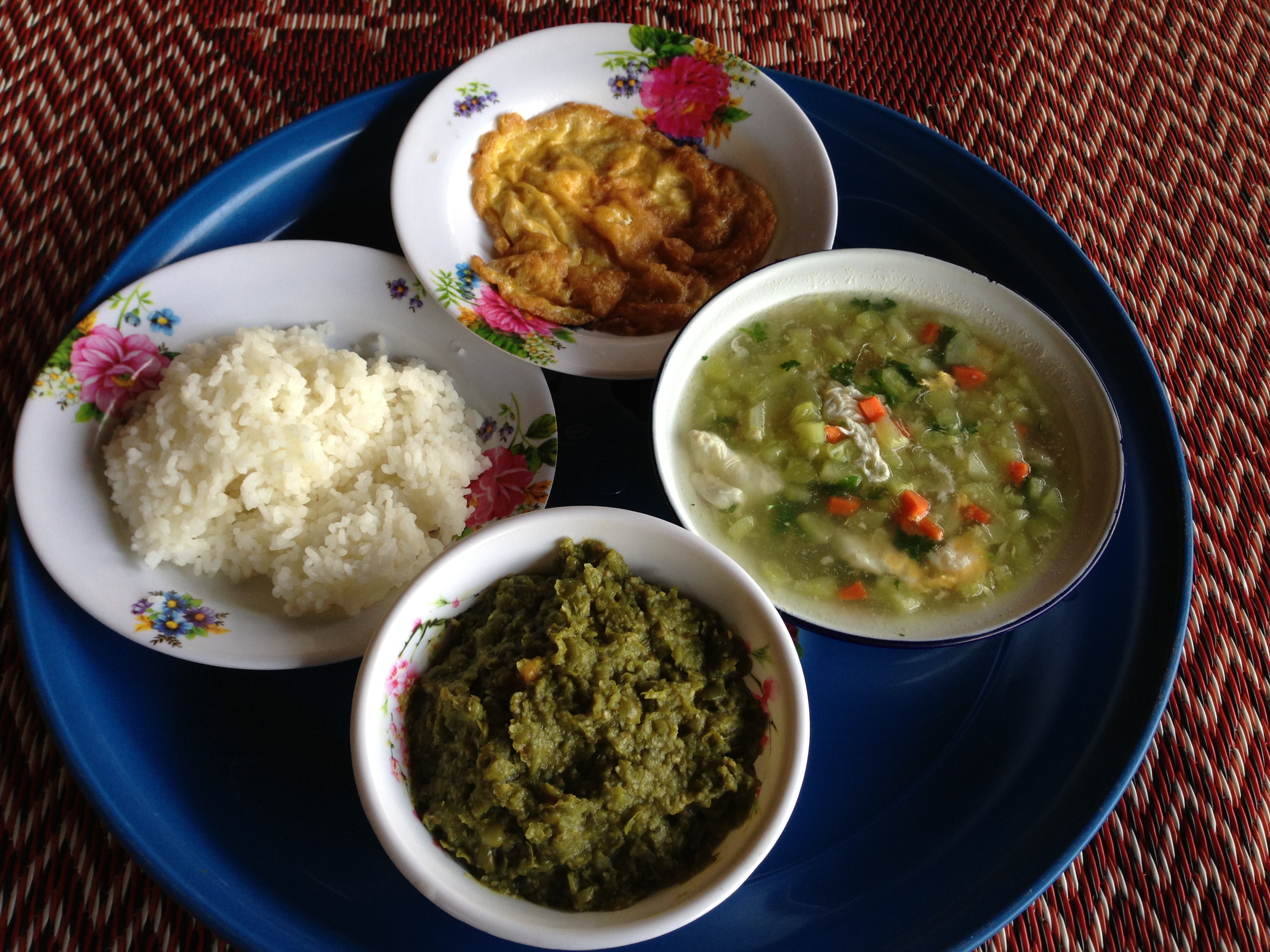
After all the intense hiking, I am a little concerned about my protein intake. Since all the chickens are free range around here—and I’m serious, they’re walking around everywhere, in and outdoors, pecking, tending to their chicks, bumming cigarettes—I ask the staff to tell Apah that eggs are okay. After I lift the egg embargo my weekly egg intake goes from zero to a metric shit-ton. I get served rice and eggs, vegetables and eggs, egg omelets, fried eggs, hard and soft boiled eggs, eggs with a side of eggs.

Clockwise: rice, egg omelet, soup with egg, spiced pea puree

Clockwise: rice, egg omelet, soup with egg, spiced pea puree

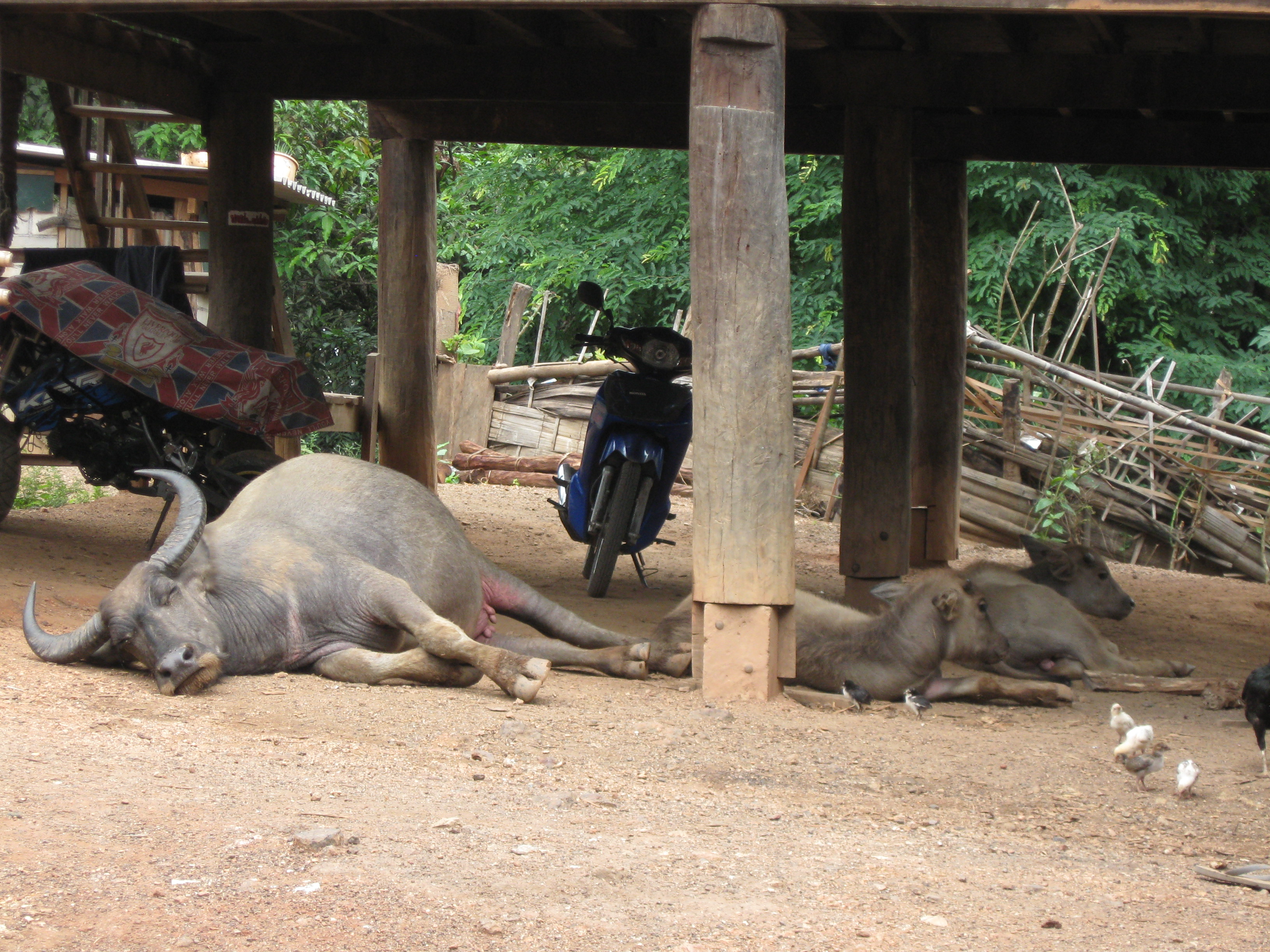
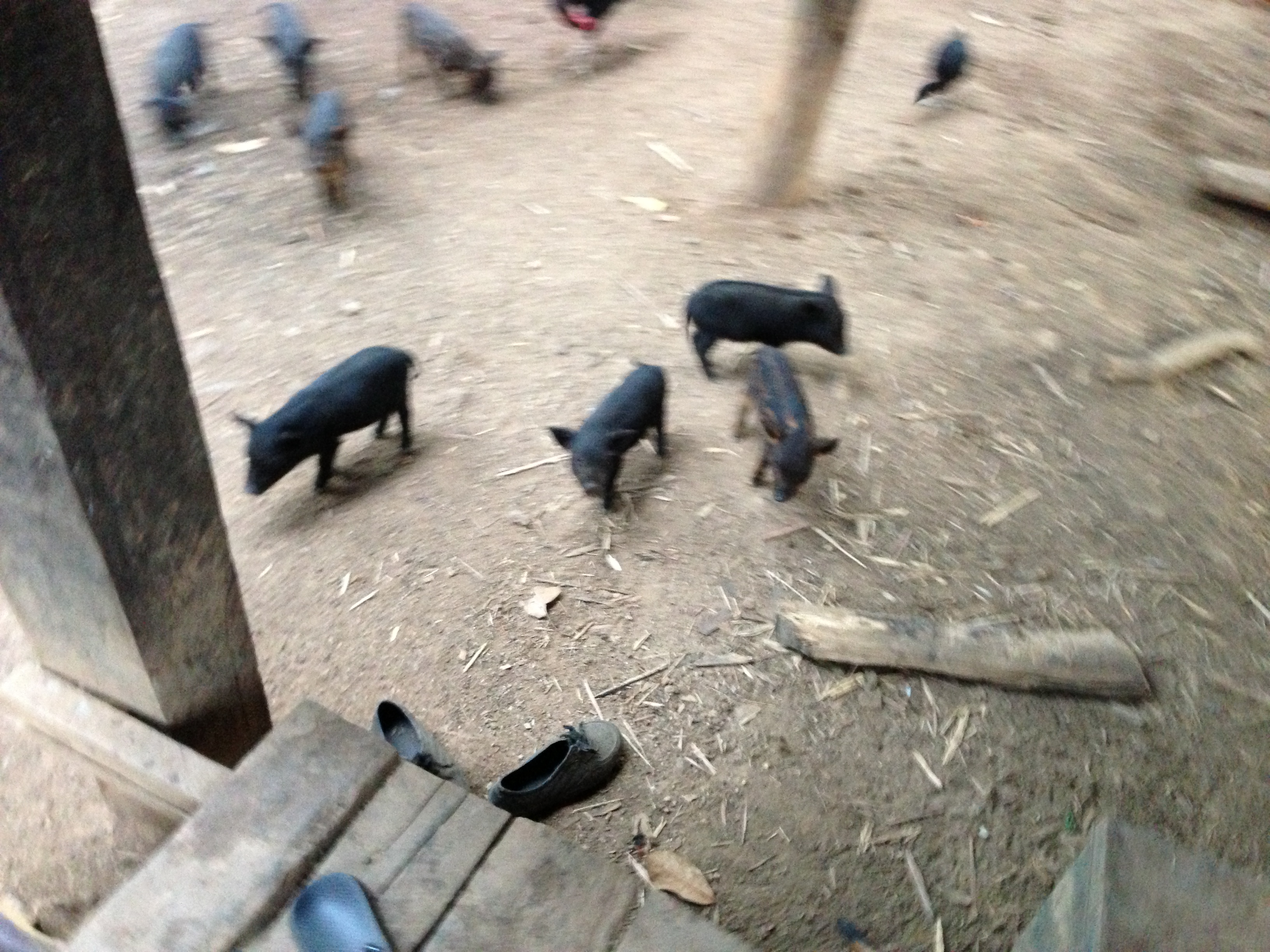
There are a lot of other animals around here. All the village families seem to have chickens and pigs. Some families also have buffaloes, which look and behave roughly like cows. And there are stray dogs and cats everywhere. Or, sort of stray—it’s unclear. Many of them are fed to a degree and hang around certain houses, but when I stop to pet a dog or cat, invariably the animal’s initial reaction is to go stiff, as if unsure of what to expect from my contact. It’s clear that they don’t get much affection, especially the cats. The dogs are all of similar breed and on the small side. The cats are shockingly small, about a third the size of one of my cats. The pigs are confined in tiny cages or tied to stakes and are barely allowed to move.

Buffaloes often just lounge under the houses

Buffaloes often just lounge under the houses

Piglets at least have some freedom

Piglets at least have some freedom

I have to bite my tongue on this stuff, obviously I can’t be Mr. Animal Crusader around here. On the plus side, I am told that the people in the village don’t eat their pigs (they get pork elsewhere). I don’t know if it’s true or not, but I like to think it is.

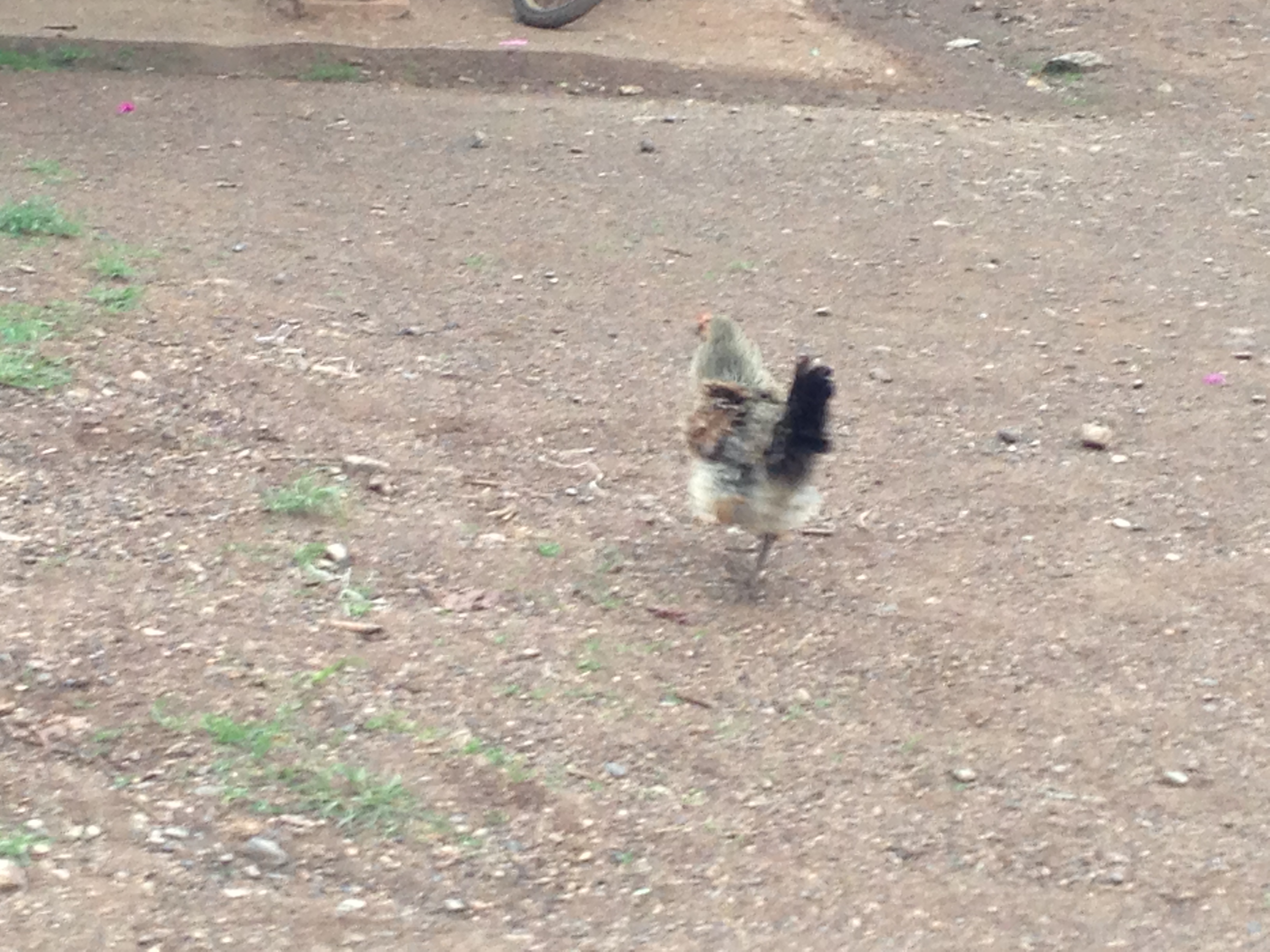
There’s one famous chicken in the village. His feathers have grown out in a strange, almost afro-like fashion. He is dubbed ‘Blow-Dried Chicken’. When I first encounter him, he gives me a suspicious, sidelong stare and a wide berth, like a movie star avoiding the paparazzi.

Da bleu!” I bellow cheerfully at Blow-Dried Chicken, testing out my Packinyah on every soul I meet.

He waddles away, clucking imperiously at me.

Blow-dried chicken ducking the media

Blow-Dried Chicken ducking the media

Blow-dried chicken escapes after pecking attack on paparazzi

Blow-Dried Chicken escapes after pecking attack on paparazzi

LAND OF A THOUSAND SMILES

I have returned from my trip to Thailand with the elephants. A lot has happened and there was a lot to absorb. I’ll be blogging about my week to week experiences in Thailand in the days to come.

iphone_June25 071

THAILAND ELEPHANTS WEEK ONE, PART ONE

I realize that I am part of something special the Wednesday of my first week in Thailand. A heavy tropical storm has just struck, shooting bullets out of the sky, and I am kneeling on the floor, helping to chop lettuce for a girl cooking dinner for me and three other ‘gollas’, or foreigners. I look out the window to see a baby elephant munching on sugar cane leaves and scratching himself. He lifts one hind leg to scratch the other, almost human-like, snorting in the cool air, his muddy gray skin darkening to a dark chocolate brown in the downpour.

It hits me. I’m eating dinner with an elephant in the backyard.

Five days earlier:

I arrive in Chiang Mai, Thailand, after 22 hours on a plane. I check into the hotel and I walk around in a daze. Part of it is jet lag, part of it is culture shock, part of it is I see no one who looks like me in the first hours at the hotel. The white people are all twenty-plus years younger. High school and college kids mostly, an endless gabbing, hard-bodied, partying parade of them. At breakfast I see a guy in his mid-thirties. We share the look of the damned. The old and the damned.

I conquer my fear of eating at a restaurant where no English is spoken nor found on the menu. The owner and I grunt, smile, and gesture at each other until somehow there’s some pad thai in front of me, and it’s delicious.

I meet other people in the volunteer program, run by GVI, Global Vision International. We’re all here to help elephants. I have signed on for a month with these strangers. I’ll be sharing meals, hiking with them, hanging out with them. They are from New York, Massachusetts, Vermont, Canada, Great Britain, Ireland, Denmark, Australia, Switzerland, and there’s a person from California, like me. The British contingent outnumbers all other nationalities, probably because GVI is based in the United Kingdom.

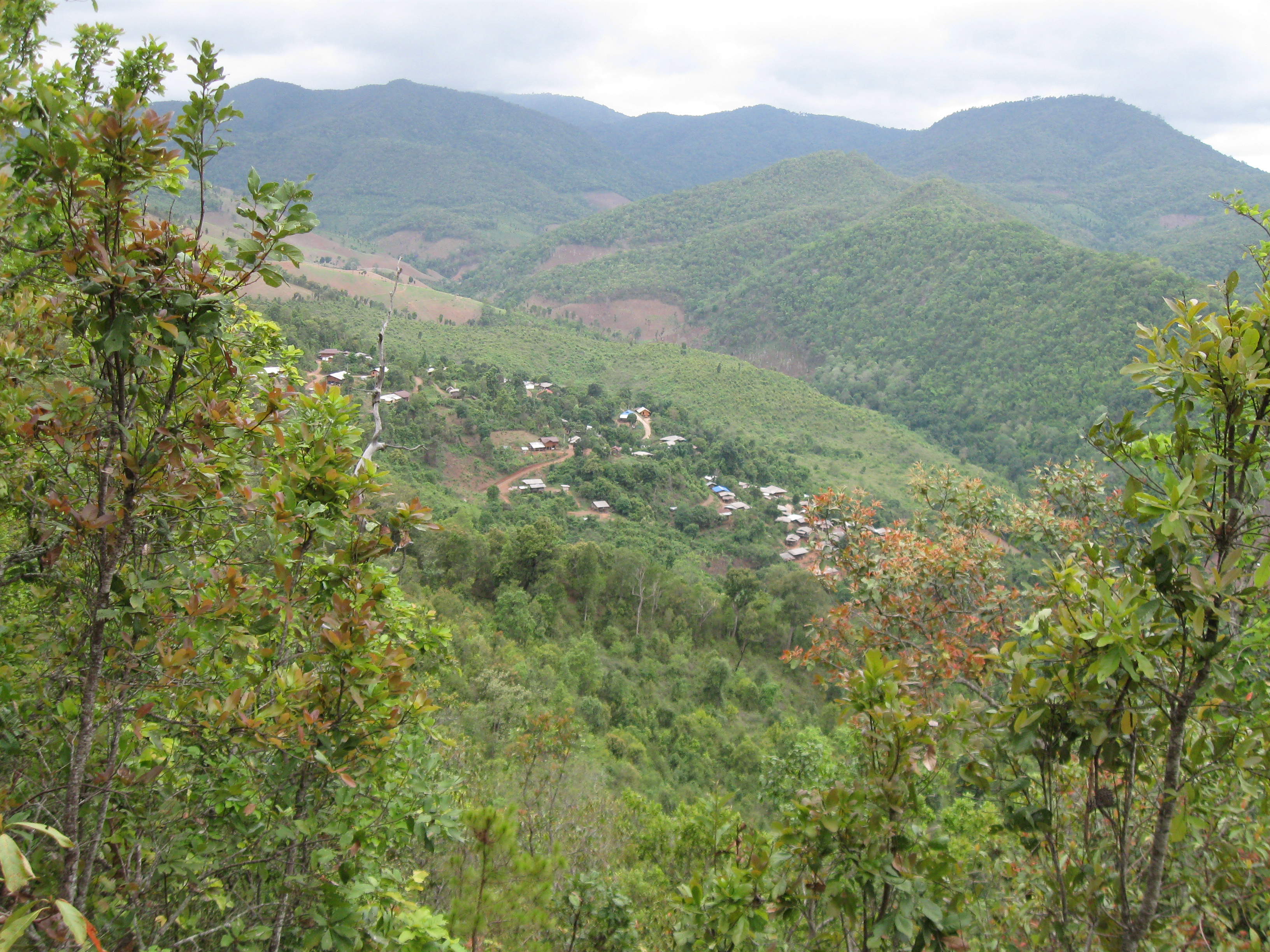
I arrive at Huay Pakoot, a tiny village in the mountains of northwest Thailand. It’s 3300 feet up, and there’s no flat land anywhere. This would be a good retirement community for mountain climbers. On my casual walks around, casually gasping for breath and casually waiting to hear the snap of a leg tendon, I get lost four times. I get lost looking for my family’s house, finding Base Hut (where the volunteers hang out), looking for the road that climbs up to the school. I get lost after a hike, which means I have another hike after the hike.

Huay Pakoot

Huay Pakoot

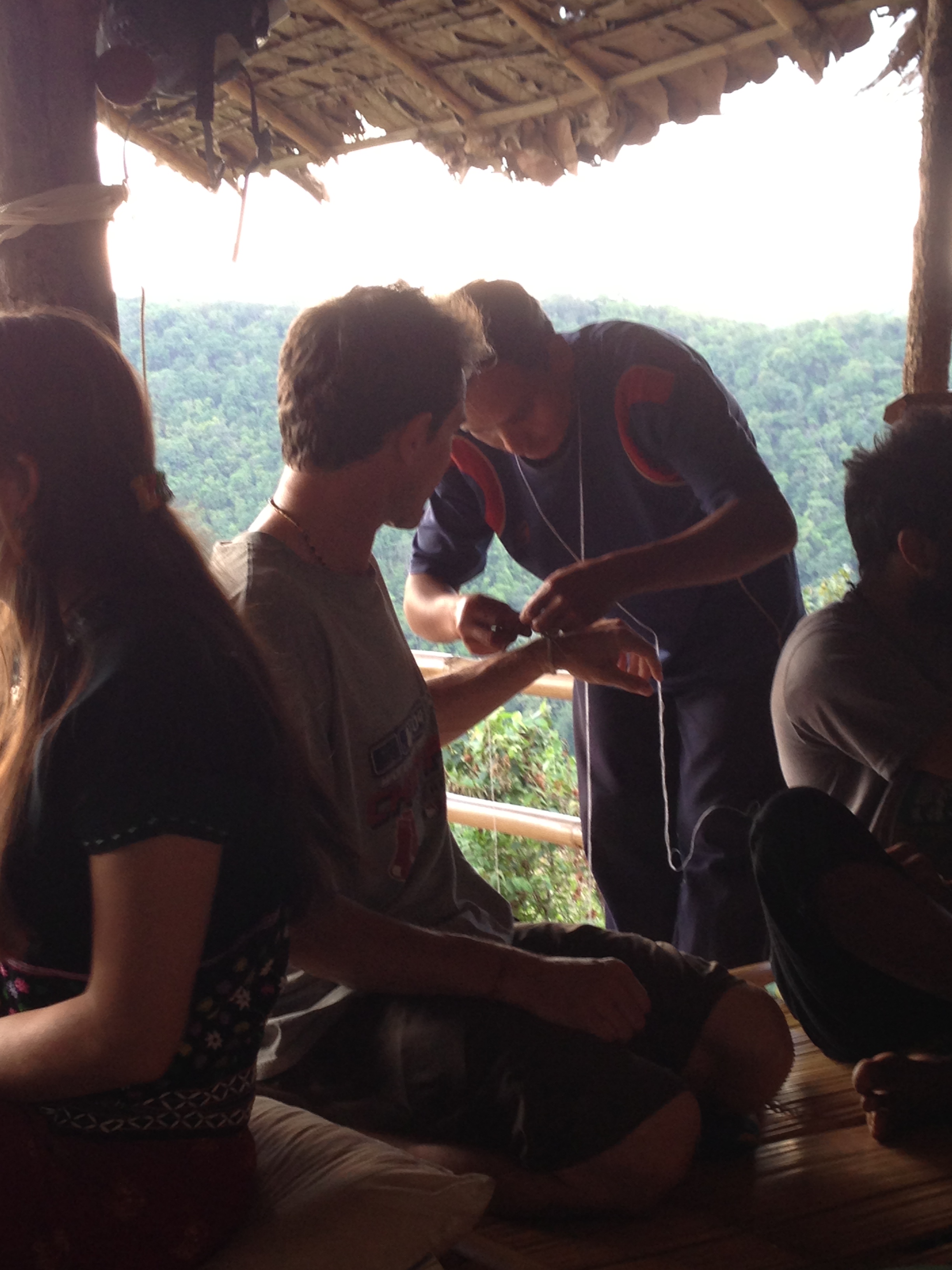
The blessing ceremony

The blessing ceremony

There is a dinner welcoming ceremony, where a few members of the village come to base hut to welcome new people and give blessings. The ceremony involves blessing a bowl of rice and going around a circle of us volunteers, tying strings around our wrists as a symbol of blessing and protection. I stare admiringly at the little twine ball around my wrist like it’s a Rolex. I do feel blessed and honored to be here. And I’m excited by string. My cats would be so pleased.

Base Hut

Base Hut

I meet my host family and they show me to my room. It has a thin not-quite-a-mattress on a floor, and a sleeping bag for a blanket. The key feature is the mosquito net surrounding the mattress and blanket. There are no such things as screens on the windows, so the mosquito net is my only sanctuary from the myriad of insects that swarm my room every night. Geckos prowl the walls and ceiling, announcing themselves with one of two strange calls. They sound either like an overstimulated squirrel or a frog that has taken voice lessons. They snap up some of the bugs but there are just too many of them.

By the end of the first week, with all the Brits around, I am helpless against the tendency to start spouting British expressions. I say things I would be shot for in America, like ‘sort out’, ‘have a go’, and ‘Hey gov, your googlies are well tarrowed in the henpot’. That last one I made up, but hearing the Brits speak I feel like they just make up words and expressions anyway.

After a few hikes, which I handle okay, and better than many of the younger people, the age gap fear fades. Does this mean that I’m okay to hang with younger people only if I can hike mountains?

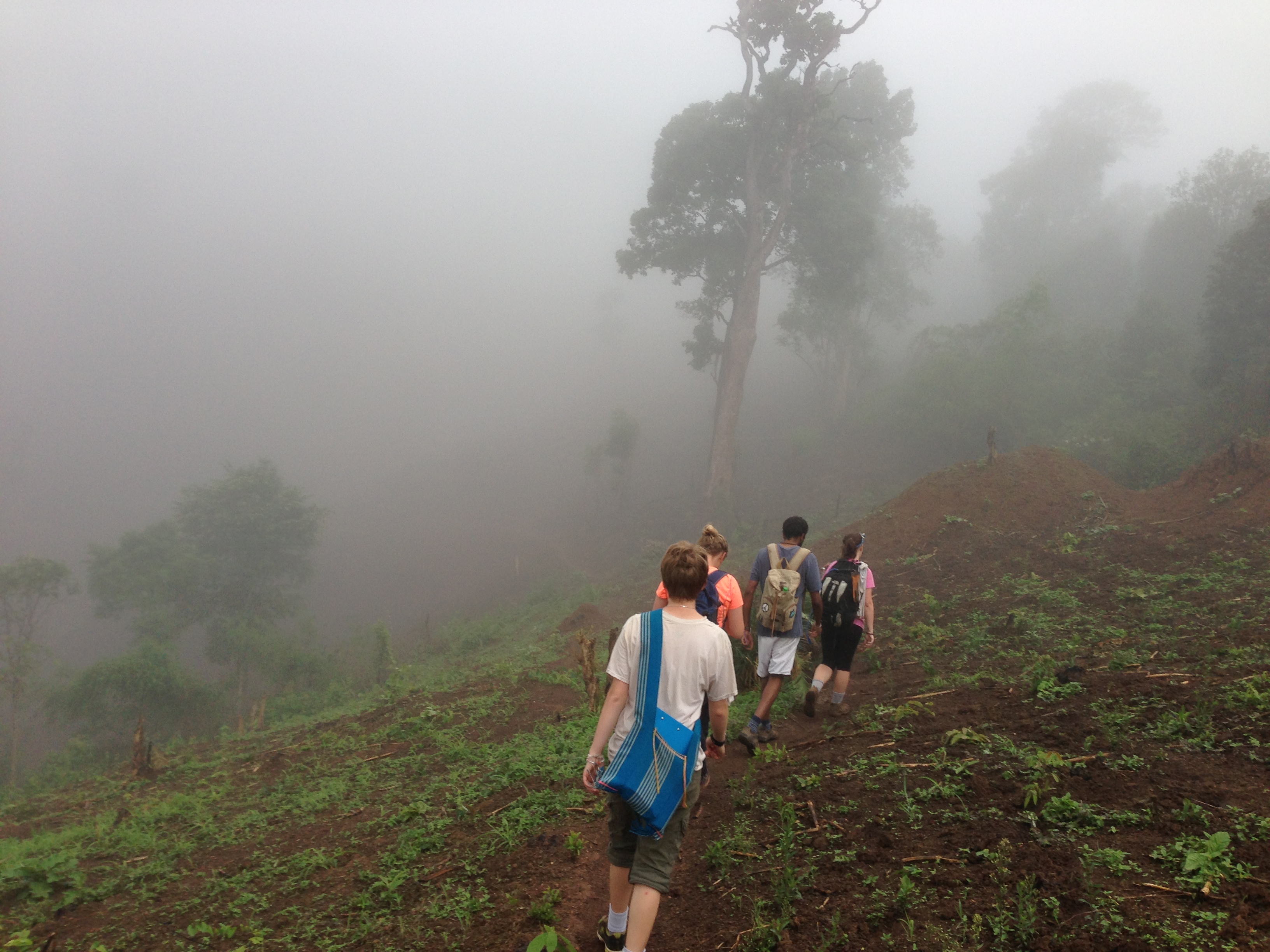
Hiking in the clouds

Hiking in the clouds

Still, I am uneasy around the new volunteers and terrified of the veterans, some of whom are here for six month marathons. I am eager to score even minor social points with my fellows, so I accept an offering of some sticky toffee and chocolate candy that I have never heard of. Most likely it’s British. Here’s how that goes, roughly: “Hey Mike, want a barmy whompun-pat*?”

(*Not the name, but it could be. I’m telling you, they make this shit up.)

Does an elephant shit in the woods?” I quip smartly, and with a self-satisfied flourish, pop the unknown candy into my mouth. In my eagerness to impress, somehow I’ve forgotten that my teeth, through a combination of genetics and bad living in my twenties, have had to be systematically repaired and replaced over the last two decades, so that now they are like rows of pearly white condominium facades. They look pretty good, but one touch and everything collapses in a dusty cloud of porcelain veneer. The candy feels like a small rock liberally coated with Krazy Glue, and on chew number two I spit out the candy, and one of my dental crowns with it.

So I have to go to the dentist. The procedure should be simple. The crown is still intact, it just needs to be cemented back into place. Simple maybe, but this is the point I realize just where we are and how hard it is to accomplish certain things. There is a dentist in a little town about an hour’s drive away. The villagers are asked their opinion of this dentist.

Some of these villagers, incidentally, chew betel nut. Chewing betel nut looks roughly like chewing tobacco while wearing lipstick as your gums bleed. The locals also smoke thin, foul-smelling cigars, and have more than a few early check-outs from the Hotel Pearly White. They give this guy a thumbs-down. He must be a medieval torturer.

Next plan is another town where there is a small hospital. There is also a dental clinic there. Apparently for this dentist the whole dental gig is just for fun though, since the clinic is open only one day a week. Maybe.

So eventually I am shipped back to Chiang Mai. The clinic there caters to western ex-pats, in fact all the people I see in the waiting room are white. After a short wait I am called in and the procedure is simple, it takes about ten minutes. Total bill: $13.20. My dentist in L.A. would charge me thirteen bucks just for reading a magazine in his waiting room.

The ride back to the village is my first ride in a Sung Tao, probably the most common mode of transport in Thailand. A Sung Tao is a truck enclosed on the top and sides, with the back open. Benches line the two side walls, and there are railings attached to the ceiling. The railings are extremely effective in pretending that I have a sense of safety and control as I am spun, yanked, and thrashed around in the back of this truck on winding mountain roads. Lovely greenery shoots by in an acid-strobing blur, the tailpipe pumps in exhaust fumes unfettered by oxygen, and driving over gaping potholes allows my face to eat generous helpings of my knees.

I never thought I would rate a trip to the dentist higher than a scenic ride through the country, but I’m learning a lot about myself here.

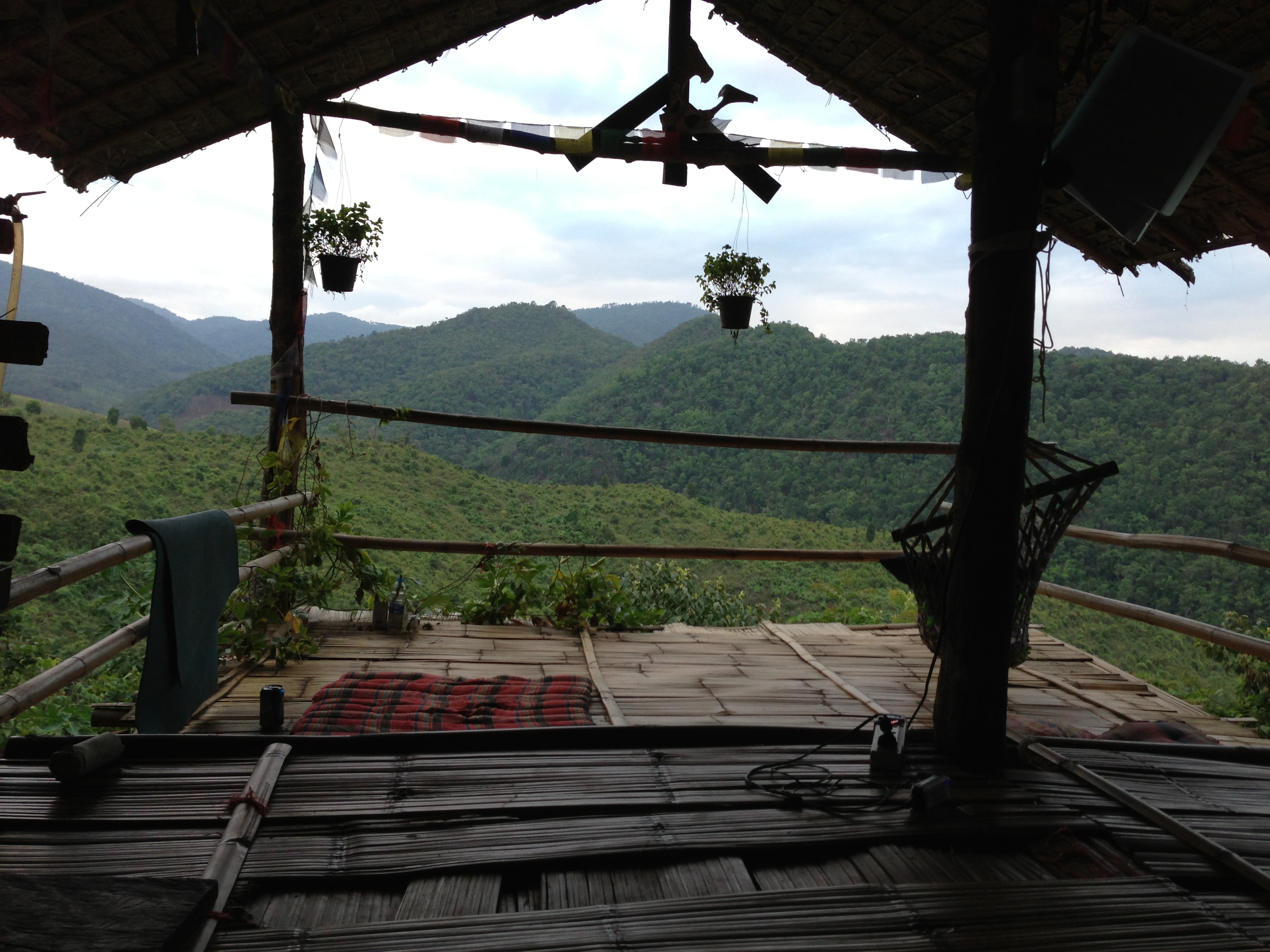
View from Base Hut

View from Base Hut